
Green Tea Proves Powerful Medicine Against Sepsis
Key points
- A major component of green tea could prove the perfect elixir for severe sepsis, an abnormal immune system response to a bacterial infection.
- The study was published this week in the Public Library of Science, or PLoS-ONE.
- They wanted to figure out a way to block this substance, which they felt would prevent the lethal sepsis process from moving forward.
- Even with the most advanced medical techniques available, half of those who develop sepsis die of the massive assault on the body.
A major component of green tea could prove the perfect elixir for severe sepsis, an abnormal immune system response to a bacterial infection. In a new laboratory study, Haichao Wang, PhD, of The Feinstein Institute for Medical Research, and his colleagues have been studying the therapeutic powers of dozens of Chinese herbal compounds in reversing a fatal immune response that kills 225,000 Americans every year. They found that an ingredient in green tea rescued mice from lethal sepsis – and the findings could pave the way to clinical trials in patients.
The study was published this week in the Public Library of Science, or PLoS-ONE. Dr. Wang had previously discovered a late mediator of sepsis called HMGB1, a substance expressed in the late stages of lethal sepsis.
They wanted to figure out a way to block this substance, which they felt would prevent the lethal sepsis process from moving forward. And it worked.
Scientists worldwide have been stumped by sepsis. Even with the most advanced medical techniques available, half of those who develop sepsis die of the massive assault on the body. Several laboratories at the Feinstein Institute are working on sepsis – both on the basic biological level and in patients.
In the latest study, Dr. Wang’s group gave a substance in green tea called EGCG to mice in the throes of severe sepsis. The dose was equivalent to 10 cups in a human. Survival jumped from 53 percent in those who didn’t receive the green tea substance to 82 percent in those who did. “Clinically, even if we could save five percent of patients, that would be huge,” said Dr. Wang. “In this study, we saved 25 percent more animals with the green tea.” He said that the green tea component, EGCG, is readily available.
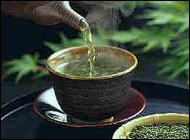
There have been more than 100 papers focusing on this natural substance and its anti-cancer benefits. “This compound prevents HMGB1 from being released by immune cells and it also prevents it from activating immune cells to produce more cytokines,” he said. Cytokines are produced by immune cells and act as weapons to defend the body against invaders. “We are hoping to stimulate future interest in clinical studies,” said Dr. Wang, who worked on the study in collaboration with Wei Li, PhD, Andrew Sama, MD, chairman of emergency medicine at North Shore University Hospital, and other Feinstein investigators.
About The Feinstein Institute for Medical Research
Headquartered in Manhasset, NY, The Feinstein Institute for Medical Research is home to international scientific leaders in Parkinson's disease, Alzheimer’s disease, psychiatric disorders, rheumatoid arthritis, lupus, sepsis, inflammatory bowel disease, diabetes, human genetics, leukemia, lymphoma, neuroimmunology, and medicinal chemistry. The Feinstein Institute, part of the North Shore-LIJ Health System, ranks in the top 6th percentile of all National Institutes of Health grants awarded to research centers. Feinstein researchers are developing new drugs and drug targets, and producing results where science meets the patient. For more information, please visit www. FeinsteinInstitute.org
Written and revised by
Gerald Hurowitz, M.D.
Our doctors write and review articles for accuracy and keep them up to date.
health.am provides general information, not medical advice. Always consult a qualified health professional about your own health.
Explore health topics
More in this topic
Lungs, Asthma & Allergies → News
New Asthma Medicine Targeting Vulnerable Inner-City Children Tested
UT Southwestern Medical Center is one of a handful of top research institutions evaluating a promising new medication researchers hope can reduce the severity and frequency of asthma attacks in inner-city children, a…
20 October 2006
NewsAllergy OTC Medicines - Speak With Your Pharmacist
For allergy sufferers, the fall season can be just as bad as the spring. A quick trip to the pharmacy for an over-the-counter (OTC) medicine; however, can quickly becoming an overwhelming experience. "Individuals are…
6 October 2006
 News
Quitting Smoking Improves Lung Function Considerably
For smokers with asthma, quitting smoking can improve lung function test scores by more than 15 percent in less than two months. The findings appear in the second issue for July 2006 of the American Journal of…
