
Gene boost for developing world
Key points
- Genetic research could help save millions of lives in the developing world, according to a report from the World Health Organization.
- Sir David said genetic research could also be used to tackle "Western" diseases such as diabetes and heart disease, which are affecting many poorer countries as they develop.
- He added: "The whole thrust if the report is that we will not change medical practice overnight by this new technology.
- It could potentially lead to advances against diseases such as malaria, tuberculosis and HIV/Aids over the next five years, said the report by Sir David Weatherall, professor at Oxford University's Weatherall Institute of Molecular Medicine.
Genetic research could help save millions of lives in the developing world, according to a report from the World Health Organization.
It could potentially lead to advances against diseases such as malaria, tuberculosis and HIV/Aids over the next five years, said the report by Sir David Weatherall, professor at Oxford University's Weatherall Institute of Molecular Medicine.
Most research has been done in industrialised countries, but places such as Brazil, India and China are carrying out their own work.
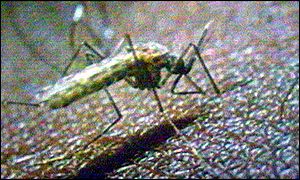
They are looking, not just at the human genome - lengths of DNA which carry the information required for every biological function - but at genomes of diseases and parasites like mosquitoes which carry diseases.
Sir David told BBC News Online: "There are some exciting examples of collaboration between the developed and developing countries in the application of this kind of technology already."
He cited work in Latin America, where diagnosis of dengue fever and leishmaniasis, two disease which are pandemic in the area, has been improved using techniques used in DNA research.
Cuba has developed a meningitis B vaccine through genetic research, which is being tested internationally.
And trials have begun in Kenya and the UK of a DNA-based Aids vaccine designed specifically for Africa.
Vaccines
Sir David said genetic research could also be used to tackle "Western" diseases such as diabetes and heart disease, which are affecting many poorer countries as they develop.
He said: "The only way forward is to try to have partnerships between Western pharmaceutical industries and developing countries.
"The only way of doing this is by somehow making it at least semi-attractive to the pharmaceutical industry."
The WHO report strongly backs a recommendation from the Commission on Macroeconomics and Health calling for a Global Health Research Fund to be started up with $1.5billion which any country could access.
The WHO argues an extra $1.5 billion should be made available to institutions working on developing drugs and vaccines for HIV/Aids, tuberculosis and malaria.
It recommends the WHO should help countries set up genetic research centres and programmes.
It also looked at the ethical considerations crucial in genetic research, such as concerns over how information kept on databases could be used.
Responsibilities
Sir David said: "This report anticipates how the global community could use genetics to attack the unfinished agenda of infectious diseases such as malaria, TB and HIV/Aids that are still killing so many in the developing world, and eventually the diseases that are crippling the health care systems of all countries, like heart disease, diabetes and cancer."
Written and revised by
Andrey Nailor, M.D.
Our doctors write and review articles for accuracy and keep them up to date.
health.am provides general information, not medical advice. Always consult a qualified health professional about your own health.
Explore health topics
More in this topic
Infections, HIV & STIs → News
Free HIV Testing to Mark World AIDS Day
Are you positive that you're negative? In recognition of World Aids Day which was Saturday December 1st, Planned Parenthood of the South Central New York wanted to make sure folks are on top of your health by offering…
4 December 2012
 News
Is This the Next Generation in HIV Prevention?
The next generation of HIV prevention for women may be on the way: an intravaginal ring that delivers the antiretroviral drug tenofovir, or other drugs, for up to 90 days. While the ring may not totally replace condoms,…
25 October 2012
 News
U.S. officials sound worldwide alert for Yosemite hantavirus risk
U.S. health officials have sent warnings to 39 other countries that their citizens who stayed in Yosemite National Park tent cabins this summer may have been exposed to a deadly mouse-borne hantavirus, a park service…
5 September 2012


