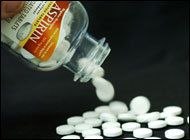
Study finds aspirin, vitamin E don't prevent cancer

Key points
- A 12-year of study involving nearly 40,000 U.S. women has found that regular, low doses of Aspirin do not generally prevent cancer, and vitamin E is ineffective in warding off Heart disease and cancer.
- The report did find aspirin might have a protective effect against lung cancer, but the authors said that needs to be confirmed with more research, and they pointed out that there is no way of knowing whether higher doses of aspirin might have yielded different results.
- "However, based on the data currently available, we do not suggest that doctors recommend low-dose aspirin therapy for primary prevention of cancer," said Nancy Cook of Brigham and Women's Hospital in Boston, chief author of the aspirin study.
- While aspirin may not work for cancer, a number of earlier studies have found it does appear to help prevent Heart disease, a bigger killer of women than cancer.
A 12-year of study involving nearly 40,000 U.S. women has found that regular, low doses of Aspirin do not generally prevent cancer, and vitamin E is ineffective in warding off Heart disease and cancer.
The report did find aspirin might have a protective effect against lung cancer, but the authors said that needs to be confirmed with more research, and they pointed out that there is no way of knowing whether higher doses of aspirin might have yielded different results.
"However, based on the data currently available, we do not suggest that doctors recommend low-dose aspirin therapy for primary prevention of cancer," said Nancy Cook of Brigham and Women's Hospital in Boston, chief author of the aspirin study.
While aspirin may not work for cancer, a number of earlier studies have found it does appear to help prevent Heart disease, a bigger killer of women than cancer.
Tuesday's findings on aspirin and vitamin E were published in two reports in this week's Journal of the American Medical Association. Both were based on data from the Women's Health Study, described as the largest undertaking of its kind involving the two substances.
There were 39,876 healthy women in the study who were at least 45 years of age when it began 1992. They were followed until 2004.
They were divided into four groups. Some got aspirin and an inert vitamin E placebo; others an aspirin placebo and real vitamin E; others both aspirin and vitamin E; and the last group got only placebos for both substances. The dose levels were 100 milligrams of aspirin and 600 international units of vitamin E, every other day.
While the aspirin-cancer findings were negative, earlier data from the same study group released in March found that the aspirin therapy reduced the risk of Stroke by 17 percent, and in women 65 and older it did reduce the risk of Heart disease, Heart Attack and Stroke .
Eric Jacobs and Michael Thun of the American Cancer Society, commenting on the aspirin-cancer results in an editorial in the same journal, said finding a drug to prevent cancer is inherently difficult.
"It is unrealistic to expect the discovery of an agent that will produce substantial reductions in overall cancer rates in the immediate future," they added.
I-Min Lee, also of Brigham and Women's Hospital and chief author of the vitamin E report, said its findings "do not support recommending vitamin E supplementation for cardiovascular disease or cancer prevention among healthy women. At present, a healthy lifestyle and regular screening for cardiovascular health and cancer are a woman's best choices for disease prevention."
Written and revised by
Gerald Hurowitz, M.D.
Our doctors write and review articles for accuracy and keep them up to date.
health.am provides general information, not medical advice. Always consult a qualified health professional about your own health.
Explore health topics
More in this topic
Heart & Blood Vessels → News
Older adults need better blood pressure and cholesterol control to prevent cardiovascular disease
The leading cause of death in the elderly , the fastest growing segment of the population, is cardiovascular disease (CVD) . Prevention of cardiovascular events in elderly patients presents a therapeutic challenge…
23 April 2016
 News
Vanderbilt study finds hypertension-related visits to emergency rooms on rise in US
The number and percentage of patients treated at emergency departments for hypertension are on the rise across the United States, according to a Vanderbilt University Medical Center study published recently in the…
22 December 2015
 News
Study finds tree nut consumption may lower risk of cardiovascular disease
A new study published in the American Journal of Clinical Nutrition found that consuming tree nuts, such as walnuts, may lower the risk of cardiovascular disease.1 After conducting a systematic review and meta-analysis…