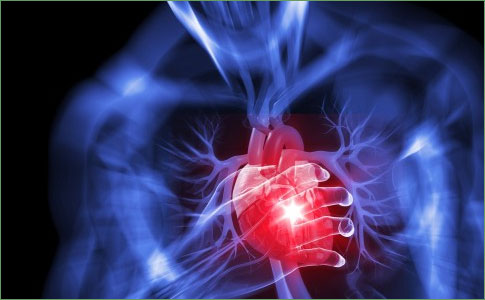
Acute Heart Failure & Pulmonary Edema

Key points
- General Considerations Typical causes of acute cardiogenic pulmonary edema include acute myocardial infarction or severe ischemia, exacerbation of chronic heart failure, acute volume overload of the left ventricle (valvular regurgitation), and mitral stenosis.
- Treatment In full-blown pulmonary edema, the patient should be placed in a sitting position with legs dangling over the side of the bed; this facilitates respiration and reduces venous return.
- Clinical Findings Acute pulmonary edema presents with a characteristic clinical picture of severe dyspnea, the production of pink, frothy sputum, and diaphoresis and cyanosis.
- A number of noncardiac conditions can also produce pulmonary edema.
Introduction
Essentials of Diagnosis
- Acute onset or worsening of dyspnea at rest.
- Tachycardia, diaphoresis, cyanosis.
- Pulmonary rales, rhonchi; expiratory wheezing.
- X-ray shows interstitial and alveolar edema with or without cardiomegaly.
- Arterial hypoxemia.
General Considerations
Typical causes of acute cardiogenic pulmonary edema include acute myocardial infarction or severe ischemia, exacerbation of chronic heart failure, acute volume overload of the left ventricle (valvular regurgitation), and mitral stenosis. By far the most common presentation in developed countries is one of acute or subacute deterioration of chronic heart failure, precipitated by discontinuation of medications, excessive salt intake, myocardial ischemia, tachyarrhythmias (especially rapid atrial fibrillation), or intercurrent infection. Often in the latter group, there is preceding volume overload with worsening edema and progressive shortness of breath for which earlier intervention can usually avoid the need for hospital admission.
Clinical Findings
Acute pulmonary edema presents with a characteristic clinical picture of severe dyspnea, the production of pink, frothy sputum, and diaphoresis and cyanosis. Rales are present in all lung fields, as are generalized wheezing and rhonchi. Pulmonary edema may appear acutely or subacutely in the setting of chronic heart failure or may be the first manifestation of cardiac disease, usually acute myocardial infarction, which may be painful or silent. Less severe decompensations usually present with dyspnea at rest and rales and other evidence of fluid retention but without severe hypoxia.
A number of noncardiac conditions can also produce pulmonary edema. This occurs either because of imbalance in the Starling forces (either a decrease in plasma proteins or an increase in pulmonary venous pressure) or a functional or anatomic abnormality of the alveolar-capillary membrane. Causes include intravenous narcotics, increased intracerebral pressure, high altitude, sepsis, several medications, inhaled toxins, transfusion reactions, shock, and disseminated intravascular coagulation. These are distinguished from cardiogenic pulmonary edema by the clinical setting, the history, and the physical examination. Conversely, in most patients with cardiogenic pulmonary edema, an underlying cardiac abnormality can usually be detected clinically or by the ECG, chest x-ray, or echocardiogram.
The chest radiograph reveals signs of pulmonary vascular redistribution, blurriness of vascular outlines, increased interstitial markings, and, characteristically, the butterfly pattern of distribution of alveolar edema. The heart may be enlarged or normal in size depending on whether heart failure was previously present. Assessment of cardiac function by echocardiography is important, since a substantial proportion of patients have normal ejection fractions with elevated atrial pressures due to diastolic dysfunction. In cardiogenic pulmonary edema, the PCWP is invariably elevated, usually over 25 mm Hg. In noncardiogenic pulmonary edema, the wedge pressure may be normal or even low.
Written and revised by
David Cohen, M.D.
Our doctors write and review articles for accuracy and keep them up to date.
health.am provides general information, not medical advice. Always consult a qualified health professional about your own health.
Explore health topics
More in this topic
Heart & Blood Vessels → News
Setting the stage for a new paradigm in treatment of heart failure
Despite a substantial increase in the number of people suffering the debilitating and often deadly effects of heart failure, treatments for the condition have not advanced significantly for at least 10 years. An…
1 February 2013
 News
Omega-6 fats not linked to heart failure risk
Despite evidence suggesting omega-6 fatty acids might protect the cardiovascular system, a large new study of men finds the fats typically found in flax seeds and some vegetable oils do nothing to prevent heart failure.…
7 December 2012
 News
Treat snoring to avoid deadly heart failure
5 December 2012: Patients with obstructive sleep apnea have the same early cardiovascular damage as diabetics, according to research presented at EUROECHO and other Imaging Modalities 2012. The study1 was presented by…
6 December 2012