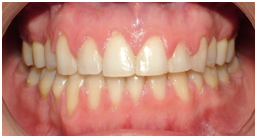
Tongue Piercing May Cause Gapped Teeth, According to UB Study
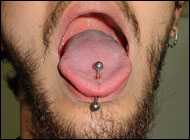
Key points
- Then, as if you needed something else, she starts "playing" with the tiny barbell-shaped stud, pushing it against her upper front teeth.
- How and why this happens has been documented in a case study by University at Buffalo researchers published in the July issue of the Journal of Clinical Orthodontics.
- "It is a basic tenet of orthodontic that force, over time, moves teeth," explains the study's primary investigator, Sawsan Tabbaa, DDS, MS, assistant professor of orthodontics at the UB School of Dental Medicine.
- Tabbaa notes that a previous UB dental school survey study of Buffalo high school students revealed that the presence of a barbell implant/stud caused a damaging habit whereby subjects pushed the metal stud up against and between their upper front teeth, a habit commonly referred to among the students as "playing."
Mark this one down as a parental nightmare.
First, your child gets her tongue pierced. Then, as if you needed something else, she starts "playing" with the tiny barbell-shaped stud, pushing it against her upper front teeth. And before you know it, she forces a gap between those teeth - a fraction-of-an-inch gap that may cost thousands of dollars in orthodontic bills to straighten.
How and why this happens has been documented in a case study by University at Buffalo researchers published in the July issue of the Journal of Clinical Orthodontics.
"It is a basic tenet of orthodontic that force, over time, moves teeth," explains the study's primary investigator, Sawsan Tabbaa, DDS, MS, assistant professor of orthodontics at the UB School of Dental Medicine.
Tabbaa notes that a previous UB dental school survey study of Buffalo high school students revealed that the presence of a barbell implant/stud caused a damaging habit whereby subjects pushed the metal stud up against and between their upper front teeth, a habit commonly referred to among the students as "playing."
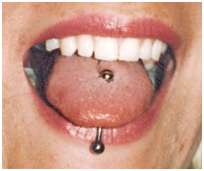
A UB orthodontist has documented that "playing" with a pierced-tongue stud can eventually result in a gap between the front teeth.
"And it happened in very high percent of the cases," said Tabbaa.
That repeated "playing" with the stud may result in a gap as is demonstrated in Tabbaa's current case study.
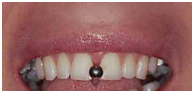
Subjects frequently develop a habit of pushing the metal stud in their tongues up against and between the front teeth, creating a gap.
The study involved a 26- year-old female patient examined at UB's orthodontic clinic who complained that a large space had developed between her upper central incisors or upper front teeth. The patient also had a tongue piercing that held a barbell-shaped tongue stud.
The tongue was pierced seven years earlier and every day for seven years she had pushed the stud between her upper front teeth, creating the space between them and, subsequently, habitually placing it in the space. The patient did not have a space between her upper front teeth prior to the tongue piercing.
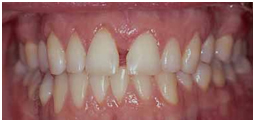
In many cases, patients did not have a space between their front teeth prior to the tongue piercing.
"The barbell is never removed because the tongue is so vascular that leaving the stud out can result in healing of the opening in the tongue, said Tabbaa, "so it makes perfect sense that constant pushing of the stud against the teeth - every day with no break - will move them or drive them apart."
Written and revised by
David Cohen, M.D.
Our doctors write and review articles for accuracy and keep them up to date.
health.am provides general information, not medical advice. Always consult a qualified health professional about your own health.