
Radiation Proctitis
Key points
- Radiation-induced proctosigmoiditis occurs most commonly with radiation therapy for cancers of the testes, prostate, urinary bladder, cervix, and uterus (23,24).
- The combination of external beam radiotherapy with radiation implants increases damage to the rectosigmoid and is often used for cervical and prostate cancer treatment because of greater efficacy.
- In 50% of patients there is acute injury with presenting symptoms of diarrhea and tenesmus without rectal bleeding occurring during radiation treatment or within 6 weeks of treatment completion.
- The majority of symptoms resolve within 6 months with conservative therapy only, and flexible sigmoidoscopy usually shows normal findings or minimal nonspecific mucosal changes.
Radiation-induced proctosigmoiditis occurs most commonly with radiation therapy for cancers of the testes, prostate, urinary bladder, cervix, and uterus (23,24). The incidence of radiation injury is higher in this region of the colon because of the relatively high doses of radiation used for tumors in the pelvic area and the relative immobility of the rectum and sigmoid colon.
The combination of external beam radiotherapy with radiation implants increases damage to the rectosigmoid and is often used for cervical and prostate cancer treatment because of greater efficacy. Clinically significant radiation proctosigmoiditis requiring therapy occurs in as many as 30% of patients acutely and 15% of patients chronically after pelvic radiation.
In 50% of patients there is acute injury with presenting symptoms of diarrhea and tenesmus without rectal bleeding occurring during radiation treatment or within 6 weeks of treatment completion.
The majority of symptoms resolve within 6 months with conservative therapy only, and flexible sigmoidoscopy usually shows normal findings or minimal nonspecific mucosal changes. Chronic injury presents with the common symptoms of rectal pain, diarrhea, and rectal bleeding occurring from a latent period of 9 months to 2 years after completion of therapy.
This group may be managed conservatively with steroid enemas, sulfasalazine, and 5-ASA products given either orally or as a rectal enema. Some benefit has been noted in combining oral sulfasalazine with steroid enemas or in using sucralfate enemas alone.
Patients with significant rectal bleeding requiring blood transfusions have a lower spontaneous remission rate of 0% to 20%, often requiring surgery (~50%) and typically a higher rate of morbidity and mortality.
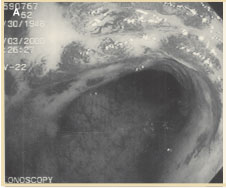
Figure 5A. Endoscopic appearance of acute radiation "proctitis." With the advent of successful endoscopic therapy such as bipolar electrocoagulation or argon plasma coagulation, which are generally safe techniques in the hands of an experienced endoscopist, the frequency of patients requiring surgical therapy has decreased. Usually patients require multiple sessions of endoscopic therapy before clinical resolution of symptoms is attained (Figures 5A, 5B). Patients with minimal rectal bleeding requiring no transfusions have a spontaneous remission rate of >70%.
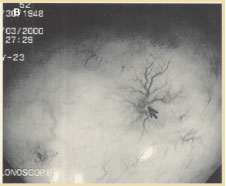
Figure 5B. Chronic radiation injury to the rectum with telangiectasias.
Written and revised by
Andrey Nailor, M.D.
Our doctors write and review articles for accuracy and keep them up to date.
health.am provides general information, not medical advice. Always consult a qualified health professional about your own health.
Explore health topics
More in this topic
Digestive Health → News
New breath test shows possible biomarker for early-stage liver disease diagnosis
A natural compound called limonene, which is found in oranges and lemons, could be indicative in early-stage diagnosis of liver disease, according to research published in the journal EBioMedicine by researchers in the…
11 August 2015
NewsThe role of intra-abdominal fat in IBD uncovered
Intra-abdominal fat cells may contribute to the development and progression of inflammatory bowel disease (IBD), according to a study1 published in Cellular and Molecular Gastroenterology and Hepatology, the basic…
6 August 2015
NewsSurgical teams reduce urinary tract infection rate by focusing on catheter use in the OR
Surgical teams at Northwestern Memorial Hospital, Chicago, are decreasing the rate of urinary tract infection (UTI) in their institution by paying scrupulous attention to the use of catheters before and immediately…