
Drugs as Effective as Surgery for Management of Gerd
Key points
- Drugs can be as effective as surgery for management of gastroesophageal reflux disease (GERD), according to a report released today by the Agency for Healthcare Research and Quality (AHRQ).
- GERD, one of the most common health conditions among older Americans, results in $10 billion annually in direct health care costs.
- The report finds that for the majority of patients with uncomplicated GERD, a class of drugs called proton pump inhibitors (PPIs) can be as effective as surgery in relieving the symptoms and improving quality of life.
- At the same time, although the surgery is sometimes chosen with the goal of removing the need to take medications, the evidence is unclear as to whether a significant number of surgical patients eventually become freed of the use of medications.
Drugs can be as effective as surgery for management of gastroesophageal reflux disease (GERD), according to a report released today by the Agency for Healthcare Research and Quality (AHRQ). The report is the first Comparative Effectiveness Review from a new AHRQ program that compares alternative treatments for health conditions.
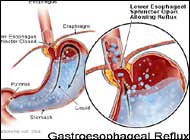
GERD, one of the most common health conditions among older Americans, results in $10 billion annually in direct health care costs. It occurs when stomach acid enters the esophagus, causing heartburn and potential damage to the esophagus. The study released today compares treatment approaches for chronic uncomplicated GERD, where the condition is likely to require life-long management but does not involve more serious disease of the esophagus.
The report finds that for the majority of patients with uncomplicated GERD, a class of drugs called proton pump inhibitors (PPIs) can be as effective as surgery in relieving the symptoms and improving quality of life.
At the same time, although the surgery is sometimes chosen with the goal of removing the need to take medications, the evidence is unclear as to whether a significant number of surgical patients eventually become freed of the use of medications. In the studies reviewed for today's report, 10 percent to 65 percent of patients resumed the use of medications.
"As the first Comparative Effectiveness Review, this report opens a new and promising chapter for helping patients choose the best evidence-based treatment for their own situation," said AHRQ Director Carolyn M. Clancy, M.D. "Today's report will help patients and health care providers make more informed choices when they consider how to manage the symptoms of chronic GERD, and especially when they consider surgery."
The report, "Comparative Effectiveness of Management Strategies for Gastroesophageal Reflux Disease," is the first to be released by AHRQ's new Effective Health Care Program. The program was created to help patients and health care providers in selecting among treatments, by reviewing existing studies and comparing the outcomes of different treatments. Nine more comparative effectiveness reviews are currently underway to examine alternative treatments for significant health conditions.
"These reports take a new step by asking not merely which treatments can be effective, but how treatments compare with one another," Dr. Clancy said. "They will provide a useful, balanced source for obtaining the best scientific information to help select the right treatment for the patient."
Today's report reviews treatment alternatives for chronic GERD, including over-the-counter medications; PPI drugs; fundoplication surgery (wrapping the top part of the stomach around the bottom of the esophagus); and endoscopic procedures.
The report notes that its findings apply to patients who have undergone diagnostic testing, and thus there is a high degree of certainty that symptoms are due to GERD. For correctly diagnosed GERD, findings include:
Written and revised by
David Cohen, M.D.
Our doctors write and review articles for accuracy and keep them up to date.
health.am provides general information, not medical advice. Always consult a qualified health professional about your own health.
Explore health topics
More in this topic
Digestive Health → News
Cheaper, more effective treatment of type 1 Gaucher disease possible
Researchers at Yale School of Medicine have found that new disease pathways involving more than one cell type leads to Type 1 Gaucher disease, a rare genetic disorder in which fatty substances called glycosphingolipids…
21 October 2010
NewsRisk of surgery for Crohn's disease lower than reported in recent studies
A new multi-center study of 854 children with Crohn's disease shows a 5-year cumulative risk of bowel surgery is significantly lower than reported in recent studies. The findings of the study, led by Hasbro Children's…
2 September 2010
NewsHow to detect malnutrition in patients effectively?
Malnutrition is an important factor, influencing both morbidity and recovery after surgery. The early detection of nutritional risk would allow early intervention, which may prevent later complications. A traditional…