
Risk Factors for Hypoglycemia
Key points
- The conventional risk factors for iatrogenic hypoglycemia (5,6,22) are based on the premise that absolute or relative insulin excess is the sole determinant of risk (Table 4).
- Insulin, or insulin secretagogue dose excessive, ill-timed, or of the wrong type 2.
- History of severe hypoglycemia, hypoglycemia unawareness, or both 3.
- Decreased exogenous glucose delivery Missed meals or snacks, overnight fast 3.
The conventional risk factors for iatrogenic hypoglycemia (5,6,22) are based on the premise that absolute or relative insulin excess is the sole determinant of risk (Table 4). Absolute or relative insulin excess occurs when:
TABLE 4 Risk Factors for Iatrogenic Hypoglycemia
Absolute or relative insulin excess
1. Insulin, or insulin secretagogue dose excessive, ill-timed, or of the wrong type
2. Decreased exogenous glucose delivery Missed meals or snacks, overnight fast
3. Decreased endogenous glucose production Alcohol
4. Increased glucose utilization Exercise
5. Increased sensitivity to insulin
- Insulin sensitizer
- Weight loss
- Late after exercise
- Improved fitness
- Middle of the night
- Glycemic control
6. Decreased insulin clearance
- Renal failure
Compromised glucose counterregulation
1. Insulin deficiency
2. History of severe hypoglycemia, hypoglycemia unawareness, or both
3. Aggressive glycemic therapy per se
- Lower HbAlc
- Lower glycemic goals
- Insulin or insulin secretagogue doses are excessive, ill-timed or of the wrong type.
- Exogenous glucose delivery is decreased, as following missed meals or snacks, or during an overnight fast.
- Endogenous glucose production is decreased, as following alcohol ingestion.
- Glucose utilization is increased, as during exercise.
- Sensitivity to insulin is increased, as during treatment with an insulin sensitizer, late after exercise, in the middle of the night, or following weight loss, increased fitness or improved glycemic control.
- Insulin clearance is decreased, as in renal failure.
However, while they must be considered carefully, these conventional risk factors explain only a minority of episodes of severe iatrogenic hypoglycemia, at least in type 1 diabetes (23).
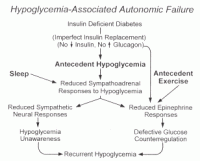
FIGURE 2 Schematic diagram of the concept of hypoglycemia-associated autonomic failure, and the pathogenesis of the syndromes of defective glucose counterregulation and hypoglycemia unawareness, in type 1 diabetes (and in advanced type 2 diabetes). As discussed earlier, iatrogenic hypoglycemia is the result of the interplay of absolute or relative insulin excess and compromised physiological and behavioral defenses against falling plasma glucose concentrations. Risk factors related to compromised defenses include:
Written and revised by
David Cohen, M.D.
Our doctors write and review articles for accuracy and keep them up to date.
health.am provides general information, not medical advice. Always consult a qualified health professional about your own health.
Explore health topics
More in this topic
Diabetes & Hormones → News
Liraglutide may help nondiabetic overweight and obese adults lose weight and lower risks
For people with prediabetes who are overweight or obese, adding 3.0 mg of liraglutide for three years to a diet and exercise plan may lead to major health improvements, new industry-sponsored research suggests. The…
5 April 2016
 News
Genetic variant shown to influence women's body shape and diabetes risk
A genetic variant near the KLF14 gene regulates hundreds of genes that govern how and where women's bodies store fat, which affects their risk of developing Type 2 diabetes, according to research presented at the…
13 October 2015
 News
Pot Smoking May Increase Prediabetes Risk
Marijuana use in early adulthood was associated with an increased risk for prediabetes, but not diabetes, by middle adulthood in an adjusted analysis of data from the Coronary Artery Risk Development in Young Adults…






