
Swaddling, regular schedule reduce infant crying
Key points
- Swaddling can help calm the cries of the youngest babies, but doesn't help once infants reach eight weeks of age, Dutch researchers report.
- On the other hand, infants of all ages cried less when their parents followed a routine and kept stimuli to a minimum, Dr.
- Excessive crying - defined medically as crying for more than three hours a day on at least one day in the previous week - can put babies at risk of being harmed by their parents, the researchers note.
- Swaddling, or wrapping cloth tightly around the infant, has been promoted as an effective technique to calm infants, the researchers note, but there is no scientific proof that it works.
Swaddling can help calm the cries of the youngest babies, but doesn't help once infants reach eight weeks of age, Dutch researchers report.
On the other hand, infants of all ages cried less when their parents followed a routine and kept stimuli to a minimum, Dr. B. E. van Sleuwen of University Medical Center Utrecht and colleagues report.
Excessive crying - defined medically as crying for more than three hours a day on at least one day in the previous week - can put babies at risk of being harmed by their parents, the researchers note. Many parents react to a tired child's cries by holding and carrying the infant, they add, which adds stimulus and also prevents the child from learning to fall asleep on its own.
Excessive crying - defined medically as crying for more than three hours a day on at least one day in the previous week - can put babies at risk of being harmed by their parents, the researchers note. Many parents react to a tired child's cries by holding and carrying the infant, they add, which adds stimulus and also prevents the child from learning to fall asleep on its own.
Swaddling, or wrapping cloth tightly around the infant, has been promoted as an effective technique to calm infants, the researchers note, but there is no scientific proof that it works.
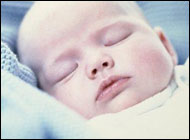
To investigate, the researchers compared the technique of introducing regularity and reducing stimuli, which one study found to be effective, with regularity and stimulus reduction plus swaddling. The regularity approach involves having parents follow a "recurrent pattern" with the baby consisting of sleep, feeding, positive interaction with the child, and awake time alone in a playpen.
Four hundred parents of children who cried excessively were given advice on stimulus reduction and regularity, while half were also trained on how to swaddle their infants at bedtime.
After the first week, all of the children cried for about an hour less daily. By the end of the eighth week, the babies were crying for about 40 minutes a day, on average, compared to about two and a half hours before the interventions began.
The infants who were one to seven weeks old at the beginning of the study fared better when swaddling was added to the regularity routine, while those who were eight weeks or older did best with the routine alone.
The findings suggest that swaddling could be particularly helpful for premature and small-for-gestational age babies, the researchers note, "who are known for their jitteriness."
They conclude that swaddling can be tried in infants who cry excessively before they reach eight weeks of age, "but the effect is modest."
SOURCE: Journal of Pediatrics, October 2006.
Written and revised by
Andrey Nailor, M.D.
Our doctors write and review articles for accuracy and keep them up to date.
health.am provides general information, not medical advice. Always consult a qualified health professional about your own health.
Explore health topics
More in this topic
Children's Health → News
Outdoor recess time can reduce the risk of nearsightedness in children
Two new studies add to the growing evidence that spending time outdoors may help prevent or minimize nearsightedness in children. A study conducted in Taiwan, which is the first to use an educational policy as a public…
2 May 2013
 News
Optimal vitamin D dosage for infants uncertain
In a comparison of the effect of different dosages of vitamin D supplementation in breastfed infants, no dosage raised and maintained plasma concentrations within a range recommended by some pediatric societies.…
2 May 2013
NewsCan therapy using robots reduce pain and anxiety among pediatric patients?
Pet therapy can help patients cope with the pain, stress, and emotional effects of a serious illness, but access to a companion animal is not always possible. Robotic animals may offer the same benefits, as explored in…


