
Parents 'ignore child bedwetting'
Key points
- Four out of five parents are unaware that children who wet their beds may be suffering from a medical condition.
- According to doctors, children suffer from nocturnal enuresis if they wet their bed at least three times a week.
- Dr Richard Butler, a consultant clinical psychologist with Leeds Community and Mental Health Trust, said: "Essentially, if you work out what the child is struggling with, you can get the right treatment in place."
- A survey of 1,000 parents suggests the vast majority believe children wet the bed because they are stressed or worried, or in some cases simply out of laziness.
Four out of five parents are unaware that children who wet their beds may be suffering from a medical condition.
A survey of 1,000 parents suggests the vast majority believe children wet the bed because they are stressed or worried, or in some cases simply out of laziness.
However, bedwetting or nocturnal enuresis is a recognised medical condition, which is estimated to affect half a million UK children. In most cases, it can be treated with medication.
But the survey - published as part of National Bedwetting Day on Thursday - found nearly half of parents are prepared to ignore the problem and hope their child grows out of it.
Medical diagnosis
According to doctors, children suffer from nocturnal enuresis if they wet their bed at least three times a week.
The condition can occur if urine production fails to slow down at night, if the bladder does not fill properly or if the child has difficulty waking up during the night.
The survey by BMRB International found 80% of parents believed bedwetting was caused by stress and worry.
One in three said their child wet the bed because they were too lazy to go to the bathroom.
Nevertheless, 85% of those questioned said they recognised that bedwetting can have a profound effect on children, leading to low self-esteem, a feeling of isolation and bullying by peers.
The charity Enuresis Resource and Information Centre (ERIC) is using National Bedwetting Day to launch a campaign to raise awareness of the issue.
This is backed by a new website offering advice to parents and children at mynightowl.co.uk.
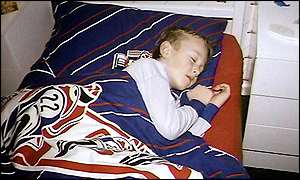
ERIC director Penny Dobson urged parents to seek medical advice if their child regularly wets their bed.
She said: "Bedwetting affects over half a million children in the UK.
"It can be successfully treated, so we urge parents to seek help and ask their GP, health visitor or school nurse about the treatments available to them."
Effective treatment
"The key thing is we feel we can treat most children effectively"
Dr Richard Butler, consultant clinical psychologist
Dr Richard Butler, a consultant clinical psychologist with Leeds Community and Mental Health Trust, said: "Essentially, if you work out what the child is struggling with, you can get the right treatment in place."
Speaking to BBC News Online, Dr Butler said it was important children received medical treatment.
"It is a problem and it can affect children in all sorts of ways. Principally, it does prevent them from engaging in social activities that peers can be engaged in. It can affect them emotionally. They can feel upset and suffer low self-esteem."
Written and revised by
David Cohen, M.D.
Our doctors write and review articles for accuracy and keep them up to date.
health.am provides general information, not medical advice. Always consult a qualified health professional about your own health.
Explore health topics
More in this topic
Children's Health → News
4 in 10 parents wrong on whether their child is under or overweight
More than 4 in 10 parents with underweight and overweight children mistakenly believe their children are in the average weight range, according to University of Melbourne research More than four in 10 parents with…
21 October 2008
 News
Parents Advised to Use Minimum Dose to Treat Childhood Fever
Parents should be advised to use the minimum dose necessary when treating a child with fever, say researchers in an editorial in this week's BMJ. Fever is common in children and can often cause distress, parental…
1 July 2006
 News
Parents in favor of research on children
Many drugs are not tested on children because testing entails a risk -children are not just small but are also busy developing their bodies. A major interdisciplinary study at Uppsala University shows that Swedish…


