
Mom, School's Making Me Sick!
Key points
- With summer ending and school underway, parents are transitioning from hearing their children moan about not being able to swim everyday, to their child complaining about homework, their new teachers or being in a different class than their friends.
- The psychological term for school-induced illnesses a child may develop when he or she is trying to dodge school is School Avoidance, or School Refusal.
- Approximately 1-5 percent of children in the United States suffer from School Avoidance.
- Many young children experience School Avoidance when they learn that they will be spending a lot of time away from their families and their familiar settings.
With summer ending and school underway, parents are transitioning from hearing their children moan about not being able to swim everyday, to their child complaining about homework, their new teachers or being in a different class than their friends. Many parents also begin to hear more complaints of tummy aches and headaches as a result of returning back to school.
The psychological term for school-induced illnesses a child may develop when he or she is trying to dodge school is School Avoidance, or School Refusal. Symptoms include nausea, fatigue, headaches and abdominal pain. According to Lori Crosby, Psy.D., Associate Professor, Pediatrics, Cincinnati Children’s Hospital Medical Center, even if children start to complain about stomach aches and other ailments, parents should still send their child to school unless they have symptoms of fever or a contagious illness. “It would probably be helpful to schedule a visit with the child’s pediatrician to rule out a ‘true’ medical problem, which may give the parent the confidence to send their child when in doubt,” said Dr. Crosby.
Approximately 1-5 percent of children in the United States suffer from School Avoidance. An article in the American Family Physician states that School Avoidance/Refusal should be considered when a student will not go to school and experiences emotional distress of physical symptoms.
Dr. Crosby says there are several reasons why a child may begin to display characteristics of School Avoidance, among them are social problems such as being bullied or isolated, having problems with learning, taking tests, giving presentations, or the child being worried about family issues such as divorce, moves, deaths, and/or a parent’s job changes/losses. Many young children experience School Avoidance when they learn that they will be spending a lot of time away from their families and their familiar settings.
Dr. Crosby suggests that while School Avoidance is not out of the ordinary, parents can seek professional counsel if they want to help their child overcome their fears associated with attending school. “Brief counseling with a psychologist or social worker may be helpful. In addition, parents should talk with school personnel. Psychologists are very familiar with such issues and can be very helpful with implementing a plan for the child,” she said.
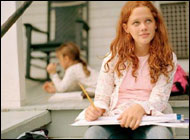
Dr. Crosby says that children who have School Avoidance issues usually go back and forth between liking school and not liking it. “Often children with these histories wax and wane in that they have good phases and more avoidant phases,” she said. “Children usually start the year off with a great outlook about attending school, and after a brief honeymoon of high hopes and good attendance that lasts for a few days to a few months, they slide back into some School Avoidance behaviors characterized by illness complaints,” said Crosby.
Written and revised by
Gerald Hurowitz, M.D.
Our doctors write and review articles for accuracy and keep them up to date.
health.am provides general information, not medical advice. Always consult a qualified health professional about your own health.
Explore health topics
More in this topic
Children's Health → News
Iowa Study Aimed at Making Tractors Safer for Kids
Researchers who hope to keep children from dying in tractor accidents are using a state-of-the-art driving simulator to help determine when kids can safely operate farm equipment. Federal regulators tried to combat the…
6 September 2012
 News
Why do infants get sick so often?
Researchers at the University of Michigan Health System are helping to quell parents’ worry about why infants seem to get sick so often. It’s been believed that, like walking and talking, fighting viral infections is…
8 August 2012
NewsWalking to school, sports tied to teen weight
Teens who play a couple of team sports and walk or bike to school are less likely to be overweight or obese, says a new study. Researchers found that of more than 1,700 teens, those who played on at least two sports…
17 July 2012


