
Preterm births explain cerebral palsy risk after IVF
Key points
- Research confirms that the reason more children born after in vitro fertilization (IVF) have a higher than average risk of cerebral palsy is largely due to the association between IVF and preterm delivery.
- In a study that included all live, single infants and twins born in Denmark within a 6-year period, preterm birth was "the most powerful predictor of cerebral palsy," report investigators in the medical journal Pediatrics.
- Preterm birth is "a major step on the causal path to cerebral palsy among IVF children, for single infants as well as twins," Dr.
- "These findings, which are consistent with other studies, are of great public health importance," they add, "and call for prevention of the high rate of multiple births and preterm deliveries in IVF."
Research confirms that the reason more children born after in vitro fertilization (IVF) have a higher than average risk of cerebral palsy is largely due to the association between IVF and preterm delivery.
In a study that included all live, single infants and twins born in Denmark within a 6-year period, preterm birth was "the most powerful predictor of cerebral palsy," report investigators in the medical journal Pediatrics.
Preterm birth is "a major step on the causal path to cerebral palsy among IVF children, for single infants as well as twins," Dr. Dorte Hvidtjorn from the University of Aarhus and colleagues note.
"These findings, which are consistent with other studies, are of great public health importance," they add, "and call for prevention of the high rate of multiple births and preterm deliveries in IVF."
Included in the team's analyses were 9,255 children conceived through IVF and 394,713 children conceived without IVF. Infants born after IVF, a common method of assisted reproduction, are sometimes referred to as "test tube" babies. An egg and sperm are combined and resulting embryo is implanted into the uterus. Usually several embryos are implanted into the womb to increase the chances of a successful implantation.
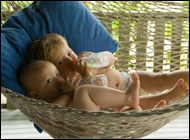
In the first analysis of the study, IVF children compared with non-IVF children had a 61-percent increased risk of cerebral palsy. However, the independent effect of IVF disappeared after information on multiple and preterm births was factored into the analysis, according Hvidtjorn and colleagues.
This indicates that the increased risk of cerebral palsy for IVF children is "largely attributable to the large proportion of IVF children who are born preterm (especially because a large proportion of IVF children are both born as multiple births and born preterm) and not to the treatment itself."
SOURCE: Pediatrics, August 2006.
Written and revised by
Gerald Hurowitz, M.D.
Our doctors write and review articles for accuracy and keep them up to date.
health.am provides general information, not medical advice. Always consult a qualified health professional about your own health.
Explore health topics
More in this topic
Children's Health → News
Small birthweight and premature births associated with higher risk of child abuse
Small birthweight and premature birth may be associated with a higher risk of child abuse and neglect, suggests research in the Journal of Epidemiology and Community Health. The findings are based on almost 120,000…
16 March 2006
 News
Mental deficits common after very preterm birth
More than three-quarters of children who were born before the 26th week of pregnancy are affected by cognitive and neurologic impairments by the time they reach school age, British researchers report. "There are a…
6 January 2005
 News
Preventing child obesity in the next generation must start before conception
The key to preventing obesity in future generations is to make their parents healthier before they conceive, leading health researchers suggest. In a series of papers, published in The Lancet Diabetes and Endocrinology,…


