
Weed treats deadly child cancer
Key points
- A chemical isolated from a weed may provide a new way to treat the most common form of aggressive brain cancer in children.
- These signals play a crucial role in directing the development of tissues during an embryo's growth.
- Other cancers are also linked to Hedgehog signalling, including rhabdomyosarcoma, a childhood muscle cancer, and basal cell skin cancer, the most common cancer in adults.
- Medulloblastoma accounts for about a fifth of all childhood brain tumours and can spread from the brain to other parts of the body.
A chemical isolated from a weed may provide a new way to treat the most common form of aggressive brain cancer in children.
Medulloblastoma accounts for about a fifth of all childhood brain tumours and can spread from the brain to other parts of the body. There is currently no effective treatment.
Researchers have found that they were able to kill off cultured mouse medulloblastoma cells and tumours, and similar cells taken from human tumours.
The key was a chemical called cylcopamine, which was extracted from the corn lily, a plant that grows in mountain meadows in the western US.
Cylcopamine was able to block growth signals put out by a protein called Hedgehog.
Crucial role
These signals play a crucial role in directing the development of tissues during an embryo's growth.
But if they are activated at a later stage they can lead to the formation of cancer, particularly in an area of the brain called the cerebellum.
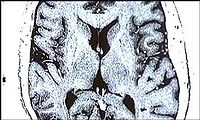
Cyclopamine reduced growth of mouse medulloblastoma cells grown in the laboratory and encouraged tumours implanted in mice to shrink.
The chemical also killed 99.9% of cancer cells taken from seven patients who had undergone surgery to remove medulloblastomas.
The researchers from Johns Hopkins University in Baltimore and the Fred Hutchinson Cancer Research Center in Seattle, said the research was promising.
But they warned there was still a long way to go before a new treatment would be widely available.
But researcher Dr James Olson said: "Success in the mice was not unexpected because we designed the mouse's tumours to rely on the Hedgehog signal.
"But learning that medulloblastoma samples from all seven patients were very sensitive to cyclopamine as well was very surprising indeed."
Other possibilities
Other cancers are also linked to Hedgehog signalling, including rhabdomyosarcoma, a childhood muscle cancer, and basal cell skin cancer, the most common cancer in adults.
However, the effect of blocking Hedgehog on the growth of these cancers has not been evaluated.
The researchers, whose work is published in the journal Science, believe other chemicals will also be found to achieve the same effect.
Tom Lober, of Cancer Research UK, told BBC News Online: "Cyclopamine or similar molecules could become important tools for treating medulloblastoma in the future.
"The research is still in its very early days and it will be years before researchers will be able to confirm its usefulness for patients.
Written and revised by
Andrey Nailor, M.D.
Our doctors write and review articles for accuracy and keep them up to date.
health.am provides general information, not medical advice. Always consult a qualified health professional about your own health.
Explore health topics
More in this topic
Cancer → News
Proton Therapy Offers New, Precise Cancer Treatment for Children with High-Risk Neuroblastoma
Proton therapy, using high-energy subatomic particles, may offer a precise, organ-sparing treatment option for children with high-risk forms of neuroblastoma. For patients in a new study of advanced radiation treatment,…
14 August 2013
 News
Family members of children with cancer may also be at risk
When a child is diagnosed with cancer, one of the first questions the parents ask is "Will my other children get cancer?" A new study from Huntsman Cancer Institute (HCI) at the University of Utah suggests the answer to…
8 August 2013
 News
Researchers develop new approach for studying deadly brain cancer
Human glioblastoma multiforme, one of the most common, aggressive and deadly forms of brain cancer, is notoriously difficult to study. Scientists have traditionally studied cancer cells in petri dishes, which have none…



