Viral Infections and breast cancer
Key points
- Human papillomavirus (HPV) infection, herpes simplex, and herpes zoster ("shingles") are occasionally found in breast cancer patients.
- HPV Infection HPV infection can cause condylomata of the external genitals and perianal region.
- Condylomata acuminata of the vulva, vagina, and perianal area are usually associated with forms of HPV that have low oncogenic potential.
- A simple biopsy of one of the lesions will confirm the diagnosis of condylomata and differentiate the lesions from vulval or vaginal in situ or invasive carcinoma.
Human papillomavirus (HPV) infection, herpes simplex, and herpes zoster ("shingles") are occasionally found in breast cancer patients.
HPV Infection
HPV infection can cause condylomata of the external genitals and perianal region.
Condylomata acuminata of the vulva, vagina, and perianal area are usually associated with forms of HPV that have low oncogenic potential.
In the case of such lesions, specific HPV typing is not usually performed.
A simple biopsy of one of the lesions will confirm the diagnosis of condylomata and differentiate the lesions from vulval or vaginal in situ or invasive carcinoma. Biopsy is necessary because early invasive squamous carcinoma of the vulva sometimes appears similar to a condyloma.
Condylomata acuminata can be treated in a variety of ways, including simple excision, cryotherapy, laser ablation, and use of topical preparations. Recently, 5% imiquimod in a cream base has been used. The cream is applied three times weekly before bedtime and is washed off the next day with mild soap and water.
The surrounding normal skin should be protected by applying petroleum-based jelly and covering with cotton gauze when imiquimod cream is applied because imiquimod can be very irritating. Imiquimod cream can be used for up to 16 weeks. Another topical treatment, podophyllotoxin 5% solution or gel, is applied to condylomata in cycles consisting of twice-daily treatment for 3 days followed by 4 days of no therapy. Up to four cycles of treatment may be given. Lesions larger than 2-3 cm are best treated by cryotherapy, electrocautery, or laser surgery. Recurrences are common with all treatments and usually occur within 3 months.
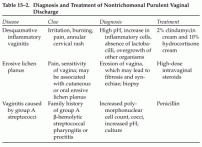
Table 15-2. Diagnosis and Treatment of Nontrichomonal Purulent Vaginal Discharge
As previously stated, the subtypes of HPV that cause condylomata do not usually lead to malignancy. However, other HPV subtypes, known as "high risk" or oncogenic types, may be associated with or may predispose to cervical, vaginal, or vulval neoplasias. Screening for the oncogenic types of HPV is now available and is performed routinely on Pap test specimens that show atypical squamous cells of undetermined significance. There is presently no effective treatment that will eliminate HPV, and HPV typing does not preclude the need for cytology screening on an annual basis or more frequently if indicated by an atypical Pap test result. The Food and Drug Administration has approved a vaccine that targets HPV types 6, 11, 16, and 18. HPV types 6 and 11 cause 90% of genital warts, and HPV types 16 and 18 cause 70% of cervical cancers. The vaccine is approved for women ages 9-26 years.
Herpes SimplexHerpes simplex is a highly contagious, recurrent, incurable sexually transmitted disease; 75% of sex partners of infected individuals will be affected.
Written and revised by
Gerald Hurowitz, M.D.
Our doctors write and review articles for accuracy and keep them up to date.
health.am provides general information, not medical advice. Always consult a qualified health professional about your own health.
Explore health topics
More in this topic
Cancer → News
Protein research uncovers potential new diagnosis and therapy for breast cancer
Scientists at the University of York, using clinical specimens from charity Breast Cancer Now's Tissue Bank, have conducted new research into a specific sodium channel that indicates the presence of cancer cells and…
9 October 2015
 News
Research connects specific variations in RNA splicing with breast cancer causation
Researchers have identified cellular changes that may play a role in converting normal breast cells into tumors. Targeting these changes could potentially lead to therapies for some forms of breast cancer. In work…
2 October 2015
NewsMulti-gene test enables some breast cancer patients to safely avoid chemotherapy
A major study published in the New England Journal of Medicine is providing the best evidence to date that a 21-gene test done on the tumor can identify breast cancer patients who can safely avoid chemotherapy.…