
Thyroid Cancer Treatment Varies by Hospital
Key points
- Where thyroid cancer patients go for care plays a large role in whether they receive radioactive iodine treatment, a new study from the University of Michigan Comprehensive Cancer Center finds.
- Anyone can develop thyroid cancer, regardless of age or gender.
- While the size and severity of the tumor also played a role in treatment, researchers found unexplained hospital factors had a significant impact on radioactive iodine use.
- “What hospital you go to makes a difference in use of radioactive iodine.
Where thyroid cancer patients go for care plays a large role in whether they receive radioactive iodine treatment, a new study from the University of Michigan Comprehensive Cancer Center finds.
While the size and severity of the tumor also played a role in treatment, researchers found unexplained hospital factors had a significant impact on radioactive iodine use.
“What hospital you go to makes a difference in use of radioactive iodine. It doesn’t just matter what the tumor looks like, but where you go for care,” says lead study author Megan Haymart, M.D., assistant professor of internal medicine at the U-M Medical School.
Results of the study appear in the Aug. 17 issue of the Journal of the American Medical Association.
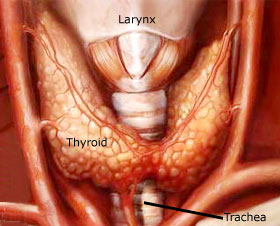
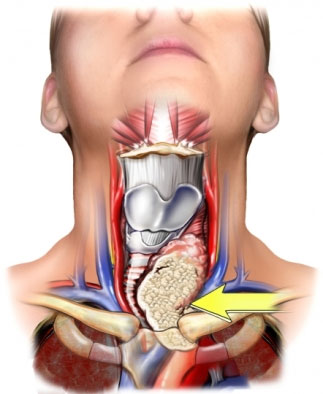
Thyroid cancer is currently one of the 10 most common cancers in the United States and is expected to become even more common in the next decade as more small, early stage cancers are uncovered.
Radioactive iodine following surgery to remove the thyroid is known to be an effective treatment for advanced or high-risk thyroid cancer that is very likely to return. But patients with small, low-risk disease often have an excellent prognosis without radioactive iodine treatment, giving some doctors pause to wonder whether they are submitting patients to unnecessary treatment and risk of side effects.
“For some patients, radioactive iodine is a very important part of treatment, but for others, the risks may outweigh the benefit. We need more studies of this low-risk group of patients to understand what the best treatment course is,” Haymart says.
In the current study, researchers looked at data from 189,219 patients diagnosed with thyroid cancer between 1990 and 2008, as reported to the National Cancer Database, a national database that captures about 85 percent of all thyroid cancers diagnosed in the United States.
Researchers found that radioactive iodine treatment is being used more frequently overall – 40 percent of patients in 1990, compared to 56 percent of patients in 2008. Size and severity of the tumor did impact a patient’s likelihood to have radioactive iodine, accounting for about 21 percent of the variation in care. In addition, factors such as whether the hospital saw a high volume of thyroid cancer patients played a role. But 29 percent of the variation between whether patients received radioactive iodine was attributable to hospital factors that could not be explained.
“Even among people who are high risk – and the guidelines are clear that these patients should receive radioactive iodine – there is still variation. This suggests doctors are unclear about the indications for radioactive iodine. We need randomized clinical trials that look at radioactive iodine in low-risk patients so that we can set better guidelines for its use,” Haymart says.
Written and revised by
Andrey Nailor, M.D.
Our doctors write and review articles for accuracy and keep them up to date.
health.am provides general information, not medical advice. Always consult a qualified health professional about your own health.
Explore health topics
More in this topic
Cancer → News
Moderate exercise may make cancer treatments more effective, kinesiologist finds
Kansas State University kinesiology research offers encouraging information for cancer patients: A brisk walk or a slow jog on a regular basis may be the key to improved cancer treatments. Brad Behnke, associate…
6 May 2015
 News
Study points to possible treatment for lethal pediatric brain cancer
Using brain tumor samples collected from children in the United States and Europe, an international team of scientists found that the drug panobinostat and similar gene regulating drugs may be effective at treating…
5 May 2015
 News
Breast cancer in young women - unique goals for treatment and research
Breast cancer that occurs in young women is likely to be more aggressive and to require more intensive types of therapy with increased risk of long-term treatment-related toxicities. The unique and significant…






