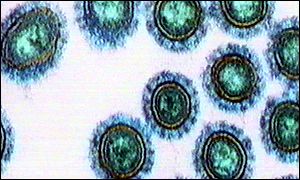
'Spy virus' could aid cancer fight
Key points
- A virus sent to destroy cancer cells which actually sends back a progress report could help doctors tailor treatments for patients.
- The virus was genetically re-programmed to produce one of two particular proteins, which are then passed out of the host cell into the bloodstream.
- The modified measles virus not only kill cancer cells, but also releases a chemical as it replicates inside the body.
- This chemical passes into the bloodstream where it can be tested, giving doctors a clue as to the success, or otherwise, of the treatment.
A virus sent to destroy cancer cells which actually sends back a progress report could help doctors tailor treatments for patients.
The modified measles virus not only kill cancer cells, but also releases a chemical as it replicates inside the body.
This chemical passes into the bloodstream where it can be tested, giving doctors a clue as to the success, or otherwise, of the treatment.
Experts are hopeful that specially-modified viruses will become a powerful weapon against certain types of cancer.
Just as some viruses enter and then destroy human cells, the new therapeutic viruses will pick on cancer cells.
However, doctors believe that different patients will respond to the viral therapy in different ways, with some perhaps needing higher, or lower doses.
The project, at America's Mayo Clinic, used a modified measles virus, which in theory should not cause illness.
Other scientists are experimenting with forms of herpes virus and common cold viruses.
Mouse testing
The virus was genetically re-programmed to produce one of two particular proteins, which are then passed out of the host cell into the bloodstream.
Different types of viral activity prompt the production of each type of protein.
In theory, the higher the viral activity, the higher the levels of the protein in the bloodstream.
"We are very encouraged to now be able to intelligently look at what happens inside the body after we have delivered our measles virus"
Dr Stephen Russell, Mayo Clinic
The protein, said the researchers, should not affect the way the virus attacked the cancer - or have any other effects on the body.
Dr Stephen Russell, one of the researchers, said: "After you give a virus, it's going to spread - that's what viruses do.
"There is anxiety about how it will work in different people - is it getting to the cancer cells, how is it spreading, how fast is it eliminated?
"Until now, we've had no way of answering those questions."
So far, the idea has only been tested in mice in the laboratory, but Dr Russell is hopeful that basic safety trials in humans could start shortly.
He said: "We are very encouraged to now be able to intelligently look at what happens inside the body after we have delivered our measles virus."
'Interesting'
Dr David Meredith, who is working to develop viral therapies for cancer at the Molecular Medicine Unit at St James' University Hospital in Leeds, said that while the advance would not influence the outcome of the treatment, it could prove useful.
Written and revised by
Andrey Nailor, M.D.
Our doctors write and review articles for accuracy and keep them up to date.
health.am provides general information, not medical advice. Always consult a qualified health professional about your own health.
Explore health topics
More in this topic
Cancer → News
Some types of papilloma virus might prevent cervical cancer
There are over 100 different types of human papilloma virus (HPV). Cervical cancer is known to be caused by infection with approximately 14 so-called “high-risk” types of this virus. Researchers from Manchester looked…
11 April 2013
 News
Virginia Tech study finds virus promising for prostate cancer treatment
A study at the Virginia-Maryland Regional College of Veterinary Medicine has identified a chicken-killing virus as a promising treatment for prostate cancer in humans. Researchers have discovered that a genetically…
9 April 2013
 News
Fight tobacco marketing, boost vaccinations to curb cancer, says report
Fighting the tobacco industry's tactics in the world's poorest countries and ensuring the best vaccines get to those most in need are key to cutting the number of cancer deaths worldwide, according to a report by…