
Selenium doesn't prevent cancer: report
Key points
- There is no convincing evidence that taking high doses of selenium - a popular dietary supplement - can prevent cancer, according to a new review.
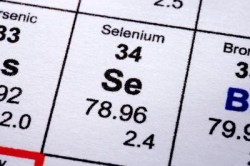
- Selenium is a mineral that is essential for humans, and is also present in soil and rocks.
- While daily selenium recommendations from the United States and World Health Organization vary between 30 and 55 micrograms per day for adults, the authors note, companies that sell the supplements claim that higher doses have a range of health benefits, including cancer prevention.
- However, "we still do not have an exact picture of what selenium is doing to human health," Dr.
There is no convincing evidence that taking high doses of selenium - a popular dietary supplement - can prevent cancer, according to a new review.
Selenium is a mineral that is essential for humans, and is also present in soil and rocks.
While daily selenium recommendations from the United States and World Health Organization vary between 30 and 55 micrograms per day for adults, the authors note, companies that sell the supplements claim that higher doses have a range of health benefits, including cancer prevention.
However, "we still do not have an exact picture of what selenium is doing to human health," Dr. Marco Vinceti, one of the authors of the new review from the University of Modena and Reggio Emilia in Italy, told Reuters Health.
To try to get a better focus on that picture for cancer in particular, Vinceti and his colleagues analyzed 55 studies on the link between selenium and different types of cancer.
Most of those were so-called "observational studies" - scientists measured how much selenium people ate every day or how much they had in their blood or toenails, then tracked who got cancer over the next few years.
The remaining 6 studies were done through more rigorous trials, in which researchers randomly divided participants into one group that took selenium supplements for a month or more, and another that took a drug-free placebo pill or nothing - then followed them for cancer. These kinds of studies are thought to be better at accounting for outside factors that may affect cancer risk.
The observational studies suggested that talking selenium may be linked to a slightly lower risk of cancer - more so in men than women.
But in the randomized trials, people assigned to take selenium at doses at least four times higher than the daily recommendation were not less likely to get cancer - prostate cancer and skin cancer, in particular - than those not taking selenium.
And some of those trials raised the question of whether high doses of selenium might be dangerous, such as by increasing the risk of diabetes.
The review is published in the Cochrane Library, a publication of the Cochrane Collaboration, an international organization that evaluates medical research.
"If you put it all together, it's not a good story for patients," Dr. Neil Fleshner, a researcher at University Health Network in Toronto who has studied the effect of selenium on prostate cancer risk, told Reuters Health.
He said it's still possible that selenium may help prevent cancer over a very long time period, or that certain kinds of selenium might work while others don't. But right now, "there's no good evidence at all that selenium is beneficial," said Fleshner, who was not involved in the review.
Written and revised by
Gerald Hurowitz, M.D.
Our doctors write and review articles for accuracy and keep them up to date.
health.am provides general information, not medical advice. Always consult a qualified health professional about your own health.
Explore health topics
More in this topic
Cancer → News
Synthetic Triterpenoids Show Promise in Preventing Colitis-Associated Colon Cancer
Researchers from Case Western Reserve and Dartmouth universities have shown that a class of small antioxidant molecules carries enormous promise for supressing colon cancer associated with colitis. These findings,…
26 June 2014
 News
Screening has prevented half a million colorectal cancers
An estimated half a million cancers were prevented by colorectal cancer screening in the United States from 1976 to 2009, report researchers from the Cancer Outcomes, Public Policy, and Effectiveness Research (COPPER)…
3 June 2014
 News
US cervical cancer rates higher than previously reported, especially among older women
Cervical cancer rates in the United States are higher than previously believed, particularly among 65- to 69-year-old women and African-American women, according to a study led by a researcher at the University of…






