U.S. task force: End routine prostate cancer screening
David Cohen, M.D.·Published 22 May 2012·9 min read
Key points
A task force advising the U.S. government on Monday recommended against routine use of the prostate-cancer screening test called PSA, or prostate specific antigen, for lack of a discernible health benefit.
Prostate-specific antigen (PSA) is a protein produced by cells of the prostate gland.
The task force analyzed 64 studies, but focused on two, both published in 2009 and updated this year.
Preventive Services Task Force gave PSA screening a D, for "don't recommend" in healthy men.
A task force advising the U.S. government on Monday recommended against routine use of the prostate-cancer screening test called PSA, or prostate specific antigen, for lack of a discernible health benefit.
Like a draft proposal last October, the U.S. Preventive Services Task Force gave PSA screening a D, for "don't recommend" in healthy men.
The reaction was fast and furious. Screening advocates warned that the recommendation will cost lives, but critics of PSA testing said thousands of men will be spared impotence and incontinence as a result of needless cancer treatment.
A D means there is "moderate or high certainty" that a procedure has no net benefit or that harms outweigh benefits. It is a downgrade from the panel's last PSA recommendation, in 2008, which said the evidence was insufficient to assess the procedure's risks and benefits, although PSA screening for men 75 and older was not recommended.
Now, however, "there is convincing evidence that the number of men who avoid dying of prostate cancer because of screening after 10 to 14 years is, at best, very small," the task force said in the May 22 issue of the Annals of Internal Medicine. Doctors, therefore, should discourage it.
The recommendation does not preclude men from asking for PSA screening, or doctors from offering it. But it could affect whether insurers, including the government's Medicare program, cover the test's $60 to $80 cost.
Prostate-Specific Antigen (PSA) Test- Prostate-specific antigen (PSA) is a protein produced by cells of the prostate gland. The PSA test measures the level of PSA in the blood. - The U.S. Food and Drug Administration (FDA) has approved the use of the PSA test along with a digital rectal exam to help detect prostate cancer in men age 50 and older. The FDA has also approved the PSA test to monitor patients with a history of prostate cancer to see if the cancer has recurred (come back).
- Doctors' recommendations for PSA screening vary.
- The higher a man's PSA level, the more likely it is that cancer is present, but there are other possible reasons for an elevated PSA level.
- Doctors take several factors into account for men who have a rising PSA level after treatment for prostate cancer.
- The PSA test for screening has limitations and is still controversial.
- Researchers are studying ways to validate and improve the PSA test and to find other ways of detecting prostate cancer early.
The only other screening method is the old-fashioned digital rectal exam, which cannot detect small, early cancers. Neither the exam nor PSA can distinguish slow-growing from aggressive cancers.
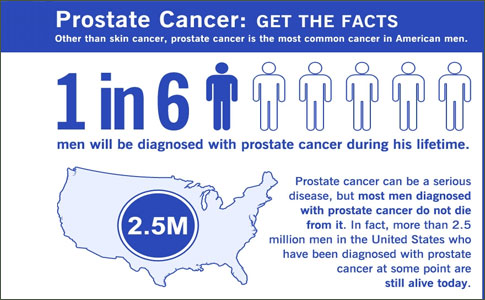
About one in six American men will be diagnosed with prostate cancer during his life; 2.8 percent, or a projected 28,000 this year, will die of it. Many cases pose no risk even without treatment. Research has shown that between one-quarter and one-third of 60-something men have prostate cancer, often without knowing it. Three-quarters of men older than 85 years have prostate cancer but few die of it.
Written and revised by
David Cohen, M.D.
Our doctors write and review articles for accuracy and keep them up to date.
health.am provides general information, not medical advice. Always consult a qualified health professional about your own health.
PSA, a blood test, is a poor screening tool because PSA levels can rise for reasons unrelated to cancer, including age and prostate enlargement. Yet an elevated PSA level can trigger a biopsy to check for cancer.
Most biopsies show no cancer, which means the PSA was a false positive. But prostate biopsies that detect cancer do so based on research from the 1840s, explained Dr. Otis Brawley, chief medical officer of the American Cancer Society.
"As many as 70 percent of these lesions are cancer only by this antiquated definition and not in behavior," he said. That is, they are indolent or inert and will not threaten a man's health or life.
What is the prostate-specific antigen (PSA) test?
Prostate-specific antigen (PSA) is a protein produced by cells of the prostate gland. The PSA test measures the level of PSA in the blood. The doctor takes a blood sample, and the amount of PSA is measured in a laboratory. Because PSA is produced by the body and can be used to detect disease, it is sometimes called a biological marker or a tumor marker.
It is normal for men to have a low level of PSA in their blood; however, prostate cancer or benign (not cancerous) conditions can increase a man's PSA level. As men age, both benign prostate conditions and prostate cancer become more common. The most frequent benign prostate conditions are prostatitis (inflammation of the prostate) and benign prostatic hyperplasia (BPH) (enlargement of the prostate). There is no evidence that prostatitis or BPH causes cancer, but it is possible for a man to have one or both of these conditions and to develop prostate cancer as well.
A man's PSA level alone does not give doctors enough information to distinguish between benign prostate conditions and cancer. However, the doctor will take the result of the PSA test into account when deciding whether to check further for signs of prostate cancer.
Radiation oncologist Anthony D'Amico of Dana-Farber Cancer Institute in Boston acknowledges that PSA screening causes overdiagnosis, "but if you get rid of the PSA test, men will suffer and die of prostate cancer," he said.
"I'm shocked that they would let people die in order to avoid incontinence and erectile dysfunction, which can be corrected."
{pagebreak}
CONFLICTING STUDIES
The task force analyzed 64 studies, but focused on two, both published in 2009 and updated this year.
The U.S. study compared 76,685 men aged 55 to 74. About half were assigned to receive annual PSA screening and half to "usual care," which sometimes included a PSA test. The study found no evidence that PSA screening saved lives after 13 years.
The European study was similar, with about half of 162,243 men aged 55 to 69 getting regular PSA tests and half not. But for every 1,055 men who were screened every one to four years, there was one fewer death from prostate cancer after 11 years compared to men in the unscreened group. That is the basis for the task force's conclusion that PSA screening for a decade will prevent at most one man in 1,000 from dying of prostate cancer.
The trials themselves were imperfect, polarizing the debate even further.
The American trial was marred by the fact that some men in the "unscreened, usual care" group did receive PSA tests. Such so-called crossovers can weaken a trial's conclusions.
"With the rate of screening in the ‘unscreened arm' matching that in the ‘screened' arm, you can never measure a difference" in the death rates "even if one exists," said D'Amico.
The trial scientists disagreed, saying the crossovers were statistically equivalent to having fewer people in the trial, said biostatistician Paul Pinsky of the National Cancer Institute, a member of the study team. "But there was twice as much screening in the intervention arm, and we did not find a mortality benefit."
The European study is actually seven studies, each from one country. In five, the results mimicked the American findings: no statistically significant reduction in deaths from prostate cancer among screened men. But studies from Sweden and the Netherlands showed benefits.
The European scientists and their supporters argued that the Swedish trial in particular was strong enough to stand on its own as evidence that PSA screening saves lives.
Perhaps the greatest problem with the European study is that the screened men diagnosed with prostate cancer generally received top-of-the-line care from academic physicians. If the unscreened men developed prostate cancer, they received less specialized, less aggressive care. "That means this was a trial not only of PSA screening but also of aggressive vs. non-aggressive treatment," said Brawley.
WEIGHING HARMS
Against the tiny benefit of PSA testing, the task force weighed its harms. At least 15 percent of PSA tests will trigger a biopsy, after which up to one-third of men experience pain, fever, bleeding, infection, difficulty urinating, or other problems requiring medical attention, studies show.
As many as 1 in 6 American men will develop prostate cancer during their lifetimes. Prostate cancer is the most frequently diagnosed cancer in males and the second leading cause of cancer death, after lung cancer. Most cases are diagnosed in men 65 years of age or older. Some prostate cancers progress quickly and cause death within months or a few years, but most grow slowly and never pose a serious threat. Prostate cancer screening tests are an important subject for men to discuss with their health care providers.
Expert panels have reached different conclusions about recommending universal screening for prostate cancer. Many complicated issues are involved:
- Side effects of treatment (impotence and incontinence) can be more harmful than the cancer itself (about 1 in 4 cancers is slow-growing and may not cause any trouble). - Current technology cannot tell a slow-growing cancer from a fast one, and a man's health or life expectancy may never be affected by the cancer. - Tests for prostate cancer do not detect all cases, and about one third of positive results do not prove to be cancer.
Some groups urge testing because the majority of evidence, though not conclusive, shows that early detection of prostate cancer saves lives. Since the introduction of blood tests for prostate-specific antigen (PSA tests) in 1990, more prostate cancers are being caught before they spread to other organs and become difficult to cure. However, the experts do not have enough information to conclude that this is a direct "cause and effect" relationship.
If a biopsy finds seemingly malignant cells, as happens to 120 in 1,000 screened men, about 90 percent of men opt for surgery, radiation or hormone-deprivation therapy. Up to five men in 1,000 opting for surgery will die within a month of the operation; 10 to 70 more will have serious cardiovascular complications such as a stroke or heart attack.
After radiotherapy and surgery, 200 to 300 of 1,000 men suffer incontinence, impotence or both. Hormone-deprivation therapy causes erectile dysfunction in about 400 of 1,000 men.
"When you stack up those harms, the tiny or zero benefits do not outweigh the risk," said task force co-chair Dr. Michael LeFevre of the University of Missouri Medical School. Because PSA tests cannot distinguish between aggressive and indolent cancer, said ACS's Brawley, "men are rendered impotent and put in diapers, and for what?" he asked. "They never really had cancer in the first place."
The task force is not saying no man of any age under any circumstances should undergo PSA screening. "A D recommendation does not preclude discussions between clinicians and patients to promote informed decision making that supports personal values and preferences," it said. The recommendation is against routine screening.
"Our recommendation should not preclude a physician offering a PSA test or a man requesting it," said co-chair LeFevre. He would be glad to provide the test for his patients, he said, if the decision were based on a clear understanding of the possible benefits and harms. ACS's Brawley agrees that "a fully-informed man who wants to be screened in his doctor's office should be screened." Only if physicians are prepared to explain all this, including that PSA screening misses just as many cancers as it finds, said the task force, can men make an informed choice.
Experts on both sides do agree that mass free screenings offered by hundreds of urology clinics and hospitals should end. "There is minimal discussion of risks and benefits; a pamphlet isn't going to do it," said D'Amico. "But a lot of fear gets invoked."
###
By Sharon Begley NEW YORK
Moffitt researchers work to determine why some prostate cancer patients experience more hot flashes


 News
 News
 News