Liver cancer patients less likely to die on wait list than candidates without carcinomas
Gerald Hurowitz, M.D.·Published 23 March 2012·8 min read
Key points
New research shows increasing disparity in mortality among candidates with and without hepatocellular carcinoma (HCC) who are on the waiting list for liver transplantation.
Before the doctor can devise a treatment plan, he must first determine what stage liver cancer the patient is in.
Surgical removal is the best option but these tumours are often too large and too extensive for surgery.
Liver Transplantation is published by Wiley-Blackwell on behalf of the American Association for the Study of Liver Diseases and the International Liver Transplantation Society.
New research shows increasing disparity in mortality among candidates with and without hepatocellular carcinoma (HCC) who are on the waiting list for liver transplantation. The study available in the April issue of Liver Transplantation, a journal published by Wiley-Blackwell on behalf of the American Association for the Study of Liver Diseases, found that liver cancer patients are less likely to die on the wait list than non-HCC candidates, prompting transplantation specialists to suggest a reevaluation of current allotment criteria for those with HCC.
In 2002, the United Network for Organ Sharing (UNOS) implemented the Model for End Stage Liver Disease (MELD) scoring system to prioritize candidates on the waiting list for liver transplantation in the U.S. While MELD accurately predicts 90-day waitlist mortality, there are some candidates with extensive disease symptoms, such as those with HCC, who need additional prioritizing criteria to assess clinical risk. These candidates receive MELD exception points, of which HCC patients on the wait list could gain 22 points based on increased mortality risk, meaning HCC patients may be transplanted before other patients at greater risk of death.
"With the scarcity of available livers for transplantation, it is vital that allocation criteria ensure those candidates at greatest mortality risk are first to receive a life-saving organ," said Dr. David Goldberg with the University of Pennsylvania and lead author of the current study. "Our study investigated appropriate designation of exception points for transplant candidates with HCC, comparing mortality risk to those with similar MELD scores, but without liver cancer."
The team analyzed data from the Organ Procurement and Transplantation Network (OPTN) UNOS database, including candidates eighteen years of age and older who were on the waiting list for liver transplantation between January 2005 and May 2009. The HCC group was comprised of 6,246 candidates who received exception points for stage two (T2) liver cancer. These candidates were more likely to be older, male and Caucasian or Asian compared to those without liver cancer. In the non-HCC cohort, candidates were categorized by MELD score with 2,564 candidates with a score of 21-23; 4,655 with 24-26; and 2,737 with MELD 27-29.
Analysis shows that within 90 days of listing 4.2% of HCC candidates were removed from the wait list for death or clinical deterioration compared to 11% of non-HCC candidates with MELD scores 21-23. For HCC candidates with 25 exception points (3-6 months wait-time) versus non-HCC candidates with MELD scores 24-26, close to 5% and 17% were removed from the waiting list, respectively. Of the HCC candidates with 28 exception points (6-9 months wait-time) 3% were removed for death or clinical deterioration compared to 24% of non-HCC candidates with MELD scores of 27-29.
Liver Cancer Facts Liver cancer, or hepatocellular carcinoma, is a disease in which malignant cells grow in the tissue of the liver, one of the largest organs in the body.
Written and revised by
Gerald Hurowitz, M.D.
Our doctors write and review articles for accuracy and keep them up to date.
health.am provides general information, not medical advice. Always consult a qualified health professional about your own health.
The liver is an essential organ that people cannot live without. It processes and stores many of the nutrients absorbed from the intestine, causes the secretion of bile that helps in the digestion of food, and produces some of the clotting factors that keep you from bleeding too much when cut or injured. The liver gets most of its supply of blood from the hepatic portal vein, which carries nutrient-rich blood from the intestines; the rest comes from the hepatic artery, which supplies the liver with blood that is rich in oxygen.
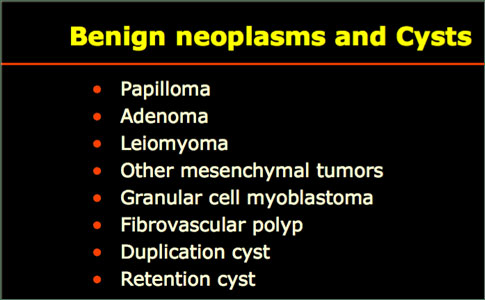
Because the liver is made up of several different types of cells, several types of tumors can form in the liver; some are cancerous and some are benign.
Roughly 75 percent of primary liver cancers begin in hepatocytes (liver cells). Hepatocellular carcinoma most commonly occurs in people whose livers have been damaged. This damage is usually caused by alcohol abuse, by chronic infection with the hepatitis B or hepatitis C virus, or cirrhosis, from food contaminants, or from metabolic diseases.
Researchers determined that over time the risk of waitlist mortality or clinical decline was unchanged for HCC candidates, but increased significantly for non-HCC candidates. Dr. Goldberg concludes, "Our data suggest HCC candidates have substantially lower odds of waitlist removal for death or deterioration than non-HCC candidates, and strongly indicates that exception points currently allotted for HCC should be lowered."
Liver Cancer Symptoms Unless a person has a preexisting liver condition, such as cirrhosis, which would cause the symptoms of liver cancer to appear more quickly and be more intense, they may not realize the symptoms are an indicator of a serious medical condition. It is for this reason that many people are not diagnosed until the liver cancer is in the advanced stage. Some of the symptoms include feeling weak or tired, jaundice (yellowing of the skin), loss of appetite and vomiting (which could lead to anorexia), feeling bloated and a dull pain that begins in the upper abdomen, sometimes extending around to the back. This may happen as the tumor grows larger.
Liver Cancer Stages
Before the doctor can devise a treatment plan, he must first determine what stage liver cancer the patient is in. There are five stages of cancer; however, they are grouped together into three treatment stages. The first, localized resectable, is used to describe a patient whose cancer is only in the liver, having not yet spread, and that can be removed completely by surgery. The second, localized and locally advanced unresectable, is used to describe a patient whose cancer is isolated to the liver, has not yet spread, but cannot be completely removed by surgery alone. The last is the advanced stage, and this is used to describe a patient whose liver cancer has spread through her body.
{pagebreak}
In a related editorial also published this month in Liver Transplantation, Dr. Patrick Northup from the University of Virginia agrees and writes, "The Goldberg et al. study adds strength to the argument that the 'sickest first' policy may not be well served by the current allocation methods for HCC under the MELD system." He proposes that the transplantation community strive to develop a more fluid allocation system that is responsive to new medical evidence. "The allocation system should be managed as a whole, rather than as isolated pieces, to ensure patients on the waitlist are prioritized based on the desire to minimize waitlist mortality."
How is primary liver cancer diagnosed? Primary liver cancer can be diagnosed using a combination of blood tests, diagnostic imaging and image-guided biopsy. The blood test that is most useful is AFP (alpha-fetoprotein).
These tumours will often show on an ultrasound scan, but for full assessment both CT and MRI scans are required.
A needle biopsy using ultrasound (or other imaging) guidance will usually confirm the diagnosis.
How is primary liver cancer treated?
Primary liver cancer is difficult to treat. Surgical removal is the best option but these tumours are often too large and too extensive for surgery.
For fit patients with limited tumours surgical removal may be possible. Liver transplant may also be an option.
Some tumours can be treated by injecting them with alcohol (PEI – percutaneous ethanol injection) or heating them with electrodes (RFA – radiofrequency ablation). This can be done by using needles passed through the skin or by using keyhole surgery.
A technique called TACE (transarterial chemoembolisation) can be used for more advanced tumours.
An interventional radiologist can place a catheter into the artery supplying the tumour and this can be used to deliver chemotherapy drugs mixed with a syrupy fluid directly to the tumour. This approach both delivers the cell-killing drug directly to the tumour and cuts off its blood supply.
Standard intravenous chemotherapy is occasionally used for inoperable tumours but any benefit is usually short lived.
Experimental treatments include biological agents such as cetuximab (eg Erbitux) and sorafenib or using catheters to deliver tiny radioactive pellets to the tumour (SIRT – selective internal radiation therapy).
Specialised techniques, involving the temporary placement of radioactive wires, can be used to treat certain primary cancers of the ducts within, or immediately adjacent to, the liver.
Unfortunately, survival rates for primary liver cancer are low – the three-year survival rate is less than five per cent.
###
This study and editorial is published in Liver Transplantation. Media wishing to receive a PDF of the articles may contact [email protected].
Full citations: "Increasing Disparity in Waitlist Mortality Rates with Increased MELD Scores for Candidates with versus without Hepatocellular Carcinoma." David Goldberg, Benjamin French, Peter Abt, Sandy Feng, Andrew M. Cameron. Liver Transplantation; (DOI: 10.1002/lt.23394) Published online: January 23, 2012; Print Issue Date: April 2012. http://onlinelibrary.wiley.com/doi/10.1002/lt.23394/abstract.
Editorial: "HCC and MELD Exceptions: The More We Understand, The More Challenging the Allocation Gets." Patrick G. Northup and Carl L. Berg. Liver Transplantation; (DOI: 10.1002/lt.23409) Published online: Februar 10, 2012; Print Issue Date: April 2012. http://onlinelibrary.wiley.com/doi/10.1002/lt.23409/abstract.
Author Contact: To arrange an interview with Dr. Goldberg, please contact Katie Delach with PENN Medicine at [email protected] or 215-349-5964. Media wishing to speak with Dr. Northup may contact Jason Ellis with the University of Virginia at [email protected] or 434-924-5679.
About the Journal
Liver Transplantation is published by Wiley-Blackwell on behalf of the American Association for the Study of Liver Diseases and the International Liver Transplantation Society. Since the first application of liver transplantation in a clinical situation was reported more than twenty years ago, there has been a great deal of growth in this field and more is anticipated. As an official publication of the AALSD and the ILTS, Liver Transplantation delivers current, peer-reviewed articles on surgical techniques, clinical investigations and drug research - the information necessary to keep abreast of this evolving specialty. For more information, please visit Liver Transplantation.
About Wiley-Blackwell
Wiley-Blackwell is the international scientific, technical, medical, and scholarly publishing business of John Wiley & Sons, with strengths in every major academic and professional field and partnerships with many of the world's leading societies. Wiley-Blackwell publishes nearly 1,500 peer-reviewed journals and 1,500+ new books annually in print and online, as well as databases, major reference works and laboratory protocols. For more information, please visit www.wileyblackwell.com or our new online platform, Wiley Online Library (wileyonlinelibrary.com), one of the world's most extensive multidisciplinary collections of online resources, covering life, health, social and physical sciences, and humanities.

 News
 News
 News