
Head and neck cancer Diagnosis and Staging
Key points
- The identification and appropriate management of premalignant mucosal lesions in the head and neck are important aspects of patient management that have major impact on overall survival rates.
- Appropriate management of leukoplakia and erythroplasia lesions includes a high index of suspicion, particularly in high-risk individuals.
- The management of erythroplasia and leukoplakia depends on the location, extent, and histology.
- Dysphagia, odynophagia, otalgia (referred), hoarseness, mucosal irregularities and ulceration, pain, weight loss, and the presence of an un-explained neck mass are the common presenting complaints of invasive HNSCC.
The identification and appropriate management of premalignant mucosal lesions in the head and neck are important aspects of patient management that have major impact on overall survival rates. Since stage (extent) of disease at the time of diagnosis is the most important prognostic factor in the treatment of HNSCC, the identification and early treatment of small cancers correlate with excellent survival statistics. Most early premalignant changes or in situ carcinomas of the oral mucosa occur as red (erythroplasia) or white (leukoplakia) patches that should be readily apparent on visual examination. In areas less easily visualized directly, such as the larynx and hypopharynx, early lesions cause such symptoms as chronic hoarseness, chronic sore throat, referred otalgia, or dysphagia. These symptoms demand visualization of the involved structures by direct or indirect laryngoscopy.
Appropriate management of leukoplakia and erythroplasia lesions includes a high index of suspicion, particularly in high-risk individuals. Although both lesions are considered premalignant, erythroplasia lesions are of greater clinical concern since approximately half of these lesions contain carcinoma in situ (CIS) or invasive cancer. Additionally, often erythroplasia and leukoplakia may coexist. Erythroplasia mandates biopsy to rule out invasive cancer.
The management of erythroplasia and leukoplakia depends on the location, extent, and histology. The diffuse field effect and multifocal nature of the epithelial carcinogenic process support the need for effective chemoprevention. White lesions can be confused with mucositis; lichen planus; local tissue irritation from mechanical, thermal, or chemical trauma; histoplasmosis; candidiasis; and other infectious processes. Lesions that persist despite the removal of local irritating factors or that are associated with ulceration, vertical growth, induration, a recent change in size, or pain should be sampled by biopsy and/or excised. Topical supravital staining with toluidine blue of suspicious lesions can be helpful in identifying areas for biopsy and in screening high-risk populations.
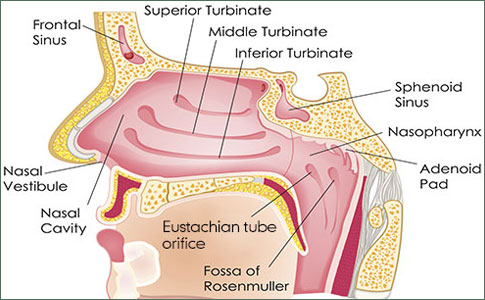
Dysphagia, odynophagia, otalgia (referred), hoarseness, mucosal irregularities and ulceration, pain, weight loss, and the presence of an un-explained neck mass are the common presenting complaints of invasive HNSCC. The predominant symptoms vary with the site: chronic dysphagia or odynophagia (for 6 weeks or even less) demands thorough visualization of the oropharynx, hypopharynx, and esophagus; chronic hoarseness demands visualization of the larynx; chronic unilateral serous otitis media in an adult is a result of cancer of the nasopharynx blocking the Eustachian tube until proven otherwise; and unilateral nasal polyps, nasal obstruction, or epistaxis is a common presenting sign of nasal cavity or paranasal sinus neoplasm. A firm or hard unilateral neck mass represents cancer until proven otherwise. In persons older than 20 years, such a mass represents neoplasm more than 80% of the time, and 80% of these neoplasms are due to metastatic spread from an UADT primary.
Written and revised by
Andrey Nailor, M.D.
Our doctors write and review articles for accuracy and keep them up to date.
health.am provides general information, not medical advice. Always consult a qualified health professional about your own health.
Explore health topics
More in this topic
Cancer → News
Robotic Surgery for Head and Neck Cancer Shows Promise
Less-invasive robotic surgery for upper airway and digestive track malignant tumors is as effective as other minimally invasive surgical techniques based on patient function and survival, according to University of…
21 December 2010
 News
Combining radiation therapy, chemotherapy safely treats head and neck cancer patients
Stereotactic body radiotherapy (SBRT), a radiation therapy procedure pioneered at the University of Pittsburgh Cancer Institute (UPCI) that precisely delivers a large dose of radiation to tumors, may effectively control…
4 November 2010
NewsStudy identifies 5 risk factors for late-stage head and neck cancer
Developing a molecular fingerprint for head and neck cancer tumors could help improve diagnosis and treatment for this deadly and often-times disfiguring form of cancer, according to researchers at Henry Ford Hospital…




