
Cancer diagnosed 'within minutes'
Key points
- Work is under way on the development of a hand-held scanner that would allow GPs to give a preliminary diagnosis of breast cancer within minutes.
- "This collaborative research project has the potential to help in screening for a range of common cancers."
- A team of computer specialists and surgeons at the University of Dundee are attempting to develop an ultrasound technique to detect breast cancers at an early stage.
- It is based on the fact that cancer tissue is much stiffer than healthy tissue.
Work is under way on the development of a hand-held scanner that would allow GPs to give a preliminary diagnosis of breast cancer within minutes.
A team of computer specialists and surgeons at the University of Dundee are attempting to develop an ultrasound technique to detect breast cancers at an early stage.
It is based on the fact that cancer tissue is much stiffer than healthy tissue.
A technique known as "Doppler imaging" is used to examine tissue while a small vibration is applied.
The cancerous area moves less than healthy parts and shows up as a different colour on the picture.
Professor Ian Ricketts, from the Department of Applied Computing, said: "Our aim is to detect tumours that are too small or too undeveloped to be detected on X-rays.
"This technology cannot be used where bone gets in the way, such as inside the skull, but it would work well in the breast or abdomen."
Precise position
"This collaborative research project has the potential to help in screening for a range of common cancers."
Professor Ian Ricketts
University of Dundee
The use of ultrasound would have the added benefit of reducing the risks posed by X-rays and the need for expensive equipment in specialised clinics, Professor Ricketts added.
The Dundee team is developing a system that takes many ultrasound views of a "slice" of the patient's body and produces a 3D image.
This will improve the ability to detect the exact position of a tumour.
The system would reduce the need for X-rays
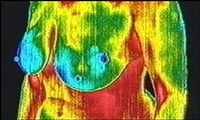
In Scotland alone, more than 3,000 women are diagnosed with breast cancer each year.
About half of those diagnosed with localised breast cancer will eventually develop metastatic cancer - where the cancer cells spread to other parts of the body.
Professor Ricketts went on: "This collaborative research project has the potential to help in screening for a range of common cancers.
"Although our present studies focus on breast cancer, which affects 38,000 women in the UK every year, the approach could equally apply to other common tumour sites including the prostate, which currently affects over 21,000 males in the UK."
Written and revised by
Andrey Nailor, M.D.
Our doctors write and review articles for accuracy and keep them up to date.
health.am provides general information, not medical advice. Always consult a qualified health professional about your own health.
Explore health topics
More in this topic
Cancer → News
Low-Income Men More Likely to be Diagnosed with Advanced Prostate Cancers
Low-income men are more likely to present with advanced prostate cancers, most likely because they don’t receive screening services shown to reduce the diagnosis of later-stage cancers, a UCLA study found. The study…
17 December 2008
 News
Majority of kidney cancers diagnosed at earliest stage
Patients in the United States today are now much more likely to be diagnosed with smaller tumors, in the earliest, most treatable stage of kidney cancer than a decade ago, leading to a slightly higher survival rate,…
19 May 2008
 Guide
Variations in Incidence Within Countries: Epidemiology of Colorectal Cancer
Ethnic Origin In the United States in the period 1973–1997, the incidence and mortality due to large bowel cancer was higher in blacks than in other ethnic groups (15) . The incidence in blacks in the United States is…




