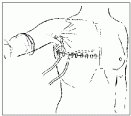
Axillary Surgery
Key points
- Axillary dissection (AD) has been part of breast cancer surgery from the time of Halsted.
- Historically, this was the rationale for the inclusion of a full axillary dissection in the radical mastectomy.
- The NSABP-B04 trial challenged the rationale for axillary dissection.
- Many clinicians, however, are uncomfortable with this interpretation.
Axillary dissection (AD) has been part of breast cancer surgery from the time of Halsted. The status of the axillary nodes remains the most powerful prognostic indicator in the treatment of invasive breast cancer. Debate exists concerning the therapeutic value of AD; however, intuitively, removing lymph nodes containing metastatic breast cancer should have a small but identifiable survival benefit.
Historically, this was the rationale for the inclusion of a full axillary dissection in the radical mastectomy. Adair reviewed 1,458 patients who had had radical mastectomy as sole treatment in the 1940s and showed that there were many women among them whose breast cancer had included ymph node involvement who were long-term survivors (all levels of lymph node involvement were represented among them). Presumably, removing the disease was curative in these patients.
The NSABP-B04 trial challenged the rationale for axillary dissection. It compared radical mastectomy, total mastectomy with radiation therapy to the axilla and total mastectomy alone, with subsequent axillary dissection for isolated axillary recurrence. There was no statistically significant survival difference between the three arms of the study. This has been interpreted as showing that axillary dissection does not confer a survival benefit.
Many clinicians, however, are uncomfortable with this interpretation. Close examination of the NSABP-04 study shows that it was not powerful enough to detect a 5-10% difference between the treatment arms; furthermore, surgeons were allowed to remove nodes in the total-mastectomy arm, greatly confounding trial results. It is worth noting that even the NSABP continued to mandate a full axillary dissection in all subsequent trials involving invasive breast cancer.
Recently, an important analysis of a large number of patients from the National Cancer Registry showed a clear survival benefit in women in whom axillary nodes were removed compared with those in whom nodes were not removed. Other studies have found a survival advantage for axillary dissection over both axillary sampling (removal of a small number of nodes) and observation. Currently, the issue remains unresolved.
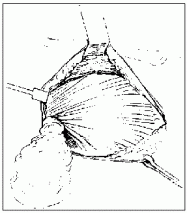
The breast is removed along with the pectoralis fascia in a superomedial to inferolateral direction. Axillary dissection is not necessary for pure DCIS. With invasive carcinoma, if the patient is clinically node positive, axillary dissection is the most effective method of gaining local control and offers the best chance of cure. It also provides staging and prognostic information. In clinically node-negative disease, the main objectives of dissection are to obtain information used to guide the selection of adjuvant therapy and to gain prognostic information.
About one-third of clinically nonsuspicious axillae will contain lymph node metastases, and in these patients, the dissection provides local control and, possibly, a survival benefit.
Written and revised by
Gerald Hurowitz, M.D.
Our doctors write and review articles for accuracy and keep them up to date.
health.am provides general information, not medical advice. Always consult a qualified health professional about your own health.
Explore health topics
More in this topic
Cancer → News
More than one third of Texas women still receive unnecessary breast biopsy surgery
Many women in Texas who are found to have an abnormality on routine mammogram or discover a lump in one of their breasts end up having an old-fashioned surgical biopsy to find out whether the breast abnormality is…
18 May 2013
 News
Minorities wait longer for breast cancer surgery
Among young women diagnosed with breast cancer, black and Hispanic patients were more likely to wait weeks for treatment, in a new study from California. Researchers found treatment delays were also more common among…
25 April 2013
 News
Centralization to fewer surgeons results in better survival after esophageal cancer surgery
Patients who undergo surgery for oesophageal cancer have a much greater chance of long term survival if the operation is carried out by a surgeon who has performed this particular operation many times before. This…