Alternative Interventions for Management of Menopause
Gerald Hurowitz, M.D.·Published 19 June 2008·13 min read
Key points
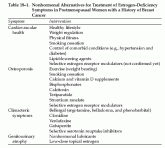
Many alternative approaches are available to correct or palliate the sequelae of estrogen deficiency, some of which are listed in Table 18-1.
That cardiovascular disease constitutes the most serious threat to the health of aging women has been amply emphasized in recent years.
Progressive bone loss occurs with advancing age, and in women, the rate of bone loss is accelerated after menopause.
Calcitonin is approved for the treatment of osteoporosis.
Many alternative approaches are available to correct or palliate the sequelae of estrogen deficiency, some of which are listed in Table 18-1.
Cardiovascular Health
That cardiovascular disease constitutes the most serious threat to the health of aging women has been amply emphasized in recent years. Constitutional factors that increase the risk of cardiovascular disease include a family history of CHD at a young age; hypertension; a history of claudication or stroke; diabetes mellitus; and hyperlipidemia. Lifestyle factors such as smoking, obesity, and physical inactivity are also important.
Clearly, smoking cessation, weight regulation, and physical fitness are important goals for preserving cardiovascular health and for maintaining a sensible, healthy lifestyle in general. Meticulous control of hypertension, hyperlipidemia, and diabetes is critically important to avoid vascular complications in all affected patients regardless of their age and gender; the panoply of available medications and therapeutic algorithms are outlined in standard medical textbooks.
Osteoporosis
Progressive bone loss occurs with advancing age, and in women, the rate of bone loss is accelerated after menopause. Nevertheless, clinically significant osteoporosis with disabling vertebral or hip fractures is far from inevitable. While estrogen deficiency remains a very important correlate with osteoporosis, hereditary and racial influences on bone mass are becoming increasingly appreciated. Thin frame, sedentary lifestyle, white race, and smoking are all important risk factors for osteoporosis. Currently, two classes of agents are available for the treatment of osteoporosis: antiresorptive and anabolic agents. Antiresorptive agents include bisphosphonates, calcitonin, and selective estrogen receptor modulators; anabolic agents include teriparatide (recombinant human parathyroid hormone) and strontium ranelate. Vitamin D and calcium supplements are integral components of any approach to fracture prevention in postmenopausal patients.
Bisphosphonates In recent years, bisphosphonates have emerged as an effective and welltolerated group of compounds that support and even enhance bone mineral density, primarily through the inhibition of osteoclast attachment to the bone matrix. The bisphosphonates are the most widely prescribed antiresorptive agents and should be regarded as first-line agents for the prevention and treatment of osteoporosis. The available data indicate that the benefits of bisphosphonates persist during several years of continuous therapy.
Table 18-1. Nonhormonal Alternatives for Treatment of Estrogen-Deficiency Symptoms in Postmenopausal Women with a History of Breast CancerThe impact of bisphosphonates on long-term morbidity and mortality from skeletal fractures is still under investigation but appears promising on the basis of results of initial studies spanning several years of continued use (Tonino et al., 2000; Bone et al., 2004). The available bisphosphonates include alendronate and risedronate, both of which have been shown to reduce the incidence of hip, vertebral, and other nonvertebral fractures by nearly 50%. Ibandronate is a newer bisphosphonate, but there is less clinical experience with this drug than with other bisphosphonates.
Written and revised by
Gerald Hurowitz, M.D.
Our doctors write and review articles for accuracy and keep them up to date.
health.am provides general information, not medical advice. Always consult a qualified health professional about your own health.
The most significant side effect of bisphosphonates is esophageal irritation, which can be minimized by taking the drug on an empty stomach in an upright position with at least 6 ounces of water and maintaining the upright position for 30 minutes. For patients unable to tolerate oral administration, intravenous bisphosphonates, such as pamidronate and zoledronate, may be considered. However, the efficacy of the intravenous bisphosphonates in preventing fractures in postmenopausal women has not been established.
Calcitonin
Calcitonin is approved for the treatment of osteoporosis. It prevents bone loss and has important analgesic properties, although there is no good evidence that it reduces the incidence of hip fracture. Calcitonin administered as a daily injection frequently causes nausea and flushing; these side effects can be especially disturbing to women with a history of cancer and prior exposure to chemotherapy. The nasal-spray formulation appears to be tolerated better.
Teriparatide
Teriparatide, a synthetic human parathyroid hormone analogue, has been demonstrated to have anabolic effects on bone and was recently approved for the treatment of osteoporosis. In patients treated with teriparatide, both vertebral and nonvertebral fractures were decreased by more than 50% (Neer et al., 2001). Use of teriparatide is limited to 2 years because of a lack of information regarding safety beyond that duration. Teriparatide is recommended for use in patients with moderate to severe osteoporosis. Paradoxically, concurrent use with bisphosphonates has been shown to dampen the effect of teriparatide on bone formation. Side effects include nausea, dizziness, and leg cramps. Development of osteosarcoma was noted in animal models but has yet to be observed in human subjects. However, given the theoretical risk, patients with or at risk for osteosarcoma should not receive teriparatide.
Breast cancer patients who have received radiation therapy to the chest for their breast cancer have an increased risk of radiation-induced osteosarcoma and, likewise, should not receive teriparatide. Breast cancer patients with established metastatic bone disease should not be treated with teriparatide.
Since the drug is associated with a modest increase in serum calcium levels, it should not be administered to anyone with hypercalcemia.
Strontium Ranelate
Strontium ranelate has recently been the subject of renewed interest because of its anabolic effects on bone. Unlike other available therapies for the prevention and treatment of osteoporosis, strontium ranelate may simultaneously decrease bone resorption and promote bone formation. Recent reports indicate that this drug decreases both vertebral and nonvertebral fractures, but long-term studies of efficacy are lacking. Side effects of strontium ranelate include nausea and diarrhea, which generally abates after 3 months of use.
Prevention of Calcium and Vitamin D Deficiency
Prevention of calcium and vitamin D deficiency is an important measure for the maintenance of skeletal integrity. Calcium supplementation significantly slows bone loss in healthy postmenopausal women and is generally included in regimens designed to prevent or treat osteoporosis. The issue of whether pharmacologic administration of vitamin D can significantly reduce the risk of vertebral or hip fracture remains controversial.
Analysis of data pooled from randomized trials in the Cochrane database indicates that co-administration of 1,000 mg calcium with 700-800 IU vitamin D results in a statistically significant reduction in the incidence of hip fractures and of all nonvertebral fractures in the populations studied (Avenell et al., 2005). Recent data from the WHI trial have raised questions about the benefit of calcium and vitamin D use in reducing the risk of hip fracture. Issues surrounding the doses of calcium and vitamin D in that trial and the design of the trial to achieve suitable power make the data difficult to interpret. It remains our policy to ensure that all women with or at risk for osteoporosis receive adequate daily calcium and vitamin D.
Additional Interventions to Prevent or Treat Osteoporosis
Benefit of exercise in the prevention of osteoporosis is an intuitive concept but has been difficult to document. While immobilization and weightlessness result in significant bone loss, neither endurance nor weight-bearing-exercise programs have been shown to prevent or reverse menopause-induced osteopenia. Perhaps the single most important measure that can reduce the cost and suffering associated with osteoporosis is the prevention of accidental falls, which are the most frequent immediate cause of hip fractures.{pagebreak}
Climacteric Vasomotor Instability
Hot flashes are the most prominent peri- and postmenopausal symptom.
They affect more than 70% of women and may persist for several years, although they usually abate spontaneously after 2 years. Hot flashes are characterized by a sensation of heat, sweating, flushing, and anxiety. The cause of hot flashes remains unclear, but they are considered to be a result of dysfunctional thermoregulation, which may be mediated by changes of central catecholamine secretion. This presumed etiology has guided the design of nonhormonal therapies, most of which have been discovered serendipitously.
Bellergal (a combination of ergotamine, belladonna, and phenobarbital) has been used for many years for the treatment of hot flashes and is moderately helpful. Blurred vision, dry mouth, and gastrointestinal symptoms are frequent side effects, and these lead many women to abandon bellergal after several months.
Clonidine, a centrally active &lpha;-agonist, is also used to treat hot flashes.
{embed="ref/google-200x90"}
Initially developed as an antihypertensive medication, clonidine has been shown in several studies to alleviate both the frequency and severity of hot flashes associated with estrogen deficiency or tamoxifen administration. Drowsiness and dry mouth are frequent side effects but are usually not severe enough to cause interruption of therapy. Orthostatic symptoms, however, may force discontinuation of clonidine and should be monitored closely, especially at the beginning of treatment.
Venlafaxine, a centrally acting inhibitor of serotonin and norepinephrine reuptake, has been demonstrated to be effective in managing hot flashes.
{embed="ref/stat-menu-br-cancer12"} In a prospective randomized trial of breast cancer survivors (Loprinzi et al., 2000), daily administration of 75 mg of venlafaxine resulted in a 61% decrease in the frequency of hot flashes. A lower dose (37.5 mg daily) was less effective (37% decrease in hot-flash frequency), and a higher dose (150 mg) was associated with more frequent side effects, including decreased appetite, nausea, dry mouth, and constipation.
Gabapentin, a γ-aminobutyric acid analogue, has been found to have beneficial effects on vasomotor symptoms. In a recent randomized trial in breast cancer patients (Pandya et al., 2005), gabapentin at a dose of 900 mg per day reduced the frequency of hot flashes by 26% versus placebo. At this dose, patients experienced a 30% improvement in the severity of hot flashes. There was no statistically significant benefit in terms of symptoms when the dose of gabapentin was reduced to 300 mg per day. Somnolence and nausea are side effects of gabapentin.
Selective serotonin reuptake inhibitors, such as paroxetine and fluoxetine, are effective in the treatment of hot flashes. A prospective crossover trial of patients randomly assigned to paroxetine (10 or 20 mg daily) for 4 weeks followed by placebo for 4 weeks or placebo for 4 weeks followed by paroxetine (10 or 20 mg daily) for 4 weeks found that after 4 weeks, paroxetine reduced the frequency of hot flashes by greater than 40% versus placebo (Stearns et al., 2005).
The higher dose of paroxetine was not associated with benefits compared to the lower dose but was associated with a greater frequency of side effects. Potential side effects of paroxetine and other selective serotonin reuptake inhibitors include nausea, somnolence, and sexual dysfunction (anorgasmia and diminished libido).
{embed="ref/google-200x90"}
Progestational agents are often considered in the management of hot flashes (Love et al., 1991). However, since progesterone is an ovarian hormone with significant potential to promote the proliferation of breast tissue, progesterone should not be used until carefully designed studies have determined its safety. Estriol, a relatively weak estrogen, has been used to relieve hot flashes and improve genitourinary symptoms.
It enjoys popularity among menopausal women and clinicians, especially in Europe, and is often discussed as an attractive alternative to HRT for women with a history of breast cancer. However, sufficient data regarding the safety of estriol in postmenopausal women are not available, and estriol should be considered as yet another estrogenic preparation. Similarly, the safety of prasterone (dehydroepiandrosterone), an adrenal steroid frequently discussed as an alternative to estrogen, is not defined for postmenopausal women.
Nonprescription nutritional supplements are popular remedies for the relief of climacteric symptoms. Among these, vitamin E was examined in a randomized trial of breast cancer survivors with hot flashes (Barton et al., 1998) and found to be ineffective. It is important to remember that estrogenic compounds are widely distributed in natural foodstuffs and in herbal remedies for the treatment of menopausal symptoms.
The symptomatic benefit derived from supplements such as Chinese herbs and soy products may well be related to their estrogenic properties. Phytoestrogens have been used for centuries by many cultures to relieve climacteric symptoms and are the subject of discussion and investigation as potential protective agents against the development of several cancers, including breast cancer.
However, phytoestrogens can clearly interact with the estrogen receptor both in vitro and in vivo; their safety in patients with breast cancer remains unestablished. In a recent placebo-controlled study (MacGregor et al., 2005), soy protein was found to be ineffective in controlling climacteric symptoms in breast cancer survivors.{pagebreak}
Other Climacteric Symptoms
Genitourinary atrophy, bladder dysfunction resulting in stress incontinence and infections, dyspareunia, and decreased libido frequently develop at the time of menopause. These symptoms, a result of estrogen deficiency, may become increasingly troublesome with time. Nonhormonal lubricants are often used to improve dyspareunia but provide no relief of bladder problems.
Vaginal estrogen in the form of an ointment or a slow-release ring can be very helpful when used judiciously and at doses low enough to avoid significant systemic absorption but high enough to correct genitourinary symptoms. It is generally possible to monitor systemic levels of estrogen and gonadotropin and to adjust the dose of topical estrogen with good results.
Other hormonal preparations to relieve genitourinary atrophy may be obtained without prescription; however, as with topical estrogen, concerns regarding systemic absorption apply.
{embed="ref/google-200x90"}
Caution should be exercised with all hormonal preparations, regardless of whether they require medical prescription.
Emotional symptoms such as irritability, nervousness, depression, insomnia, and inability to concentrate are also described by many menopausal women, but whether there is a causal association between these symptoms and estrogen deficiency is still being debated. A number of herbal remedies, such as hypericum (St. John's wort), are advocated by the health-food industry and are widely used, but information about their efficacy remains anecdotal.
{embed="ref/stat-menu-br-cancer12"}
Selective Estrogen Receptor Modulators
A number of compounds have been developed that have antiestrogenic effects on some tissues but act as estrogens in others. These compounds are known as selective estrogen receptor modulators (SERMs).
Tamoxifen, the oldest SERM, is a very effective antineoplastic agent that is in widespread use and is used for prolonged periods in postmenopausal women with breast cancer. Early concerns that this antiestrogen might have deleterious effects on the cardiovascular and skeletal systems have, fortunately, proved unwarranted.
Tamoxifen administration is associated with a fall of total and LDL cholesterol levels; the effects of tamoxifen on HDL cholesterol levels are less consistent. These beneficial effects persist during at least 2 years of continuous tamoxifen therapy and may be accompanied by improvements in clinical cardiovascular morbidity.
{embed="ref/google-200x90"}
The possibility of benefit is supported by reports that among patients randomly assigned to tamoxifen or no treatment, fewer tamoxifen-treated patients were admitted to the hospital for cardiac disease or suffered a fatal heart attack (Love et al., 1991; Rutqvist et al., 1993).
Equally promising is evidence that tamoxifen may exert an estrogenic effect on the skeleton and thus prevent postmenopausal bone loss (Fornander et al., 1990). In the National Surgical Adjuvant Breast and Bowel Project P-1 trial, in which women at risk for breast cancer were randomly assigned to either tamoxifen or placebo and prospectively followed for 5 years, tamoxifen was found to reduce the rate of fractures by 29% in women aged 50 years or older (Fisher et al., 2005). However, a long-term reduction in the rate of vertebral and hip fractures has yet to be clearly demonstrated. On the other hand, tamoxifen may exacerbate climacteric vasomotor symptoms and depression and may cause additional side effects, especially endometrial proliferation.
At this time, the most effective uses of tamoxifen are adjuvant therapy for breast cancer and chemoprevention of breast cancer rather than management of menopause. The recent increased use of aromatase inhibitors, such as anastrozole, in place of tamoxifen has been predicated upon accumulating data showing greater effectiveness of aromatase inhibitors in all stages of breast cancer. Although anastrozole has no significant detrimental effect on serum lipids or cardiovascular health, it is associated with increased bone turnover and may predispose patients to more pronounced bone loss than that caused by tamoxifen; systematic skeletal surveillance is very important in this setting.
Raloxifene, another SERM, is approved for the prevention of osteoporosis (Delmas et al., 1997). Like tamoxifen, raloxifene decreases total and LDL cholesterol. The Multiple Outcomes of Raloxifene Evaluation trial prospectively followed osteoporotic postmenopausal women randomly assigned to raloxifene or placebo for 3 years (Ettinger et al., 1999; Barrett-Connor et al., 2002). Results of the study were notable for a reduced risk of new vertebral fractures (reduced up to 50%) among raloxifene users.
A decrease in CHD events in women with increased cardiovascular risk was also observed in the raloxifene group. The use of raloxifene was associated with a 72% reduction in the risk of invasive breast cancer, largely due to an 84% reduction in the risk of estrogen receptor-positive breast cancers (there was no effect on estrogen receptor-negative breast cancers). The Continued Outcomes Relevant to Evista trial studied the same population of women for an additional 4 years and found a continued reduction in the risk of invasive breast cancer with extended use of raloxifene (Martino et al., 2004). Initial results from the Study of Tamoxifen and Raloxifene, a large, randomized trial comparing raloxifene to tamoxifen for breast cancer prevention in postmenopausal women, have recently been announced (National Cancer Institute, 2006). The study found that women treated with raloxifene had 29% fewer deep venous thromboses and pulmonary embolisms than women treated with tamoxifen, but there was no difference in the number of strokes or deaths from strokes in the two groups.
There was a higher incidence of uterine cancer in the tamoxifen group than in the raloxifene group, but further review of the data is necessary to determine the significance of this finding. Raloxifene was shown to be as effective as tamoxifen in lowering the incidence of invasive breast cancer. The incidences of lobular carcinoma in situ and ductal carcinoma in situ were reduced by half in the tamoxifen group, but there was no apparent reduction in the incidence of these noninvasive cancers in the raloxifene group.
Additional SERMs, including tibolone and droloxifene, are under investigation or available outside the United States for management of menopausal symptoms.
Gilbert G. Fareau and Rena Vassilopoulou-Sellin Estrogen replacement therapy in breast cancer patients: a time for change? Proc Am Soc Clin Oncol 1996;15:121.

 Guide
 Guide
 News