Patient Makes Dramatic Recovery From Stroke
Key points
- It's a good thing Corina Thomas went straight to the hospital after waking up with a terrific headache and tingling on her left side.
- While talking with doctors at Loyola University Hospital, Thomas was suddenly unable to speak.
- Fortunately, Thomas had arrived in time to be treated with the clot-busting drug tPA.
- Thomas, 66, is an example of how, in some cases, patients can significantly minimize the severity of strokes by receiving treatment within three hours of the first onset of symptoms, said Loyola stroke specialist Dr.
It's a good thing Corina Thomas went straight to the hospital after waking up with a terrific headache and tingling on her left side.
The Maywood resident was having a severe stroke. While talking with doctors at Loyola University Hospital, Thomas was suddenly unable to speak. "I knew what I wanted to say, but I couldn't get the words out," she said. "I started crying."
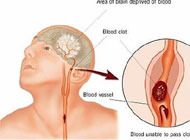
Fortunately, Thomas had arrived in time to be treated with the clot-busting drug tPA. The drug dissolved a clot that was blocking blood flow to her brain. Thomas started getting better within an hour, and made a virtually complete recovery.
Thomas, 66, is an example of how, in some cases, patients can significantly minimize the severity of strokes by receiving treatment within three hours of the first onset of symptoms, said Loyola stroke specialist Dr. Jose Biller.
On Tuesday, May 5, Loyola will be among hundreds of hospitals that will participate in Stroke Alert to educate the public about stroke warning signs and the importance of calling 911 immediately. In the Chicago area, health care workers from Loyola and several other hospitals will distribute informational flyers at train stations.
Stroke is the third leading cause of death and the leading cause of long-term disability. Unfortunately, many patients delay getting treatment. They often ignore symptoms or think the problem will go away on its own.
Biller cautioned that not all stroke patients are candidates for clot-busting treatment. And even among patients who do qualify for tPA and receive timely treatments, not all will do as well as Thomas. While getting to the emergency room immediately won't guarantee patients will make a full recovery, it will significantly improve their chances, Biller said. Biller is chairman of the Department of Neurology, Loyola University Chicago Stritch School of Medicine.
Federal guidelines say it should take a hospital no more than 60 minutes to conduct a neurological evaluation, perform an imaging scan and administer a clot-busting drug, if appropriate. Loyola can do this as quickly as 30 minutes.
Loyola provides specialized stroke care 24 hours a day, seven days a week from a multi-disciplinary team of stroke experts. The Stroke Center at Loyola has received the Gold Seal of Approval™ for stroke care from the Joint Commission. Many patients participate in clinical trials of the latest experimental therapies.
Warning signs of stroke include sudden:
* Weakness of the face, arm or leg, especially on one side of the body.
* Numbness or tingling of the face or one side of the body.
* Confusion or trouble understanding.
* Trouble speaking.
* Trouble seeing in one or both eyes.
* Trouble walking; dizziness; loss of balance or coordination.* Severe, unusual headaches.
Written and revised by
Gerald Hurowitz, M.D.
Our doctors write and review articles for accuracy and keep them up to date.
health.am provides general information, not medical advice. Always consult a qualified health professional about your own health.
Explore health topics
More in this topic
Brain & Nerves →1 in 4 stroke patients discontinue prescription drugs within 3 months
A quarter of stroke patients discontinue one or more of their prescribed secondary stroke prevention medications within three months of hospitalisation for an acute stroke, finds a study. Dr. Cheryl D. Bushnell Wake…
16 May 2012