Many people continue to smoke after being diagnosed with cancer
Key points
- A new analysis has found that a substantial number of lung and colorectal cancer patients continue to smoke after being diagnosed.
- Smoking is the single biggest cause of cancer in the world.Thanks to years of research, the links between smoking and cancer are now very clear.
- When a patient receives a cancer diagnosis, the main focus is to treat the disease.
- The investigators determined smoking rates around the time of diagnosis and five months after diagnosis in 5,338 lung and colorectal cancer patients.
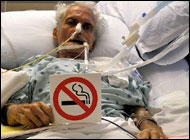
A new analysis has found that a substantial number of lung and colorectal cancer patients continue to smoke after being diagnosed. Published early online in CANCER, a peer-reviewed journal of the American Cancer Society, the study provides valuable information on which cancer patients might need help to quit smoking.
When a patient receives a cancer diagnosis, the main focus is to treat the disease. But stopping smoking after a cancer diagnosis is also important because continuing to smoke can negatively affect patients' responses to treatments, their subsequent cancer risk, and, potentially, their survival. Elyse R. Park, PhD, MPH, of the Massachusetts General Hospital/Harvard Medical School in Boston, led a team that looked to see how many patients quit smoking around the time of a cancer diagnosis, and which smokers were most likely to quit.
The investigators determined smoking rates around the time of diagnosis and five months after diagnosis in 5,338 lung and colorectal cancer patients. At diagnosis, 39 percent of lung cancer patients and 14 percent of colorectal cancer patients were smoking; five months later, 14 percent of lung cancer patients and 9 percent of colorectal cancer patients were still smoking. These results indicate that a substantial minority of cancer patients continue to smoke after being diagnosed. Also, although lung cancer patients have higher rates of smoking at diagnosis and following diagnosis, colorectal cancer patients are less likely to quit smoking following diagnosis.
Factors and characteristics that predicted continued smoking differed by cancer type. Lung cancer patients who continued smoking tended to have Medicare or other public health insurance, have a lower body mass index, have low emotional support, not have received chemotherapy, not have had surgery, have had prior heart disease, and have smoked a high number of cigarettes per day at some point during their lives. Colorectal cancer patients who continued to smoke tended to be male, have completed less education, be uninsured, not have had surgery, and have once smoked a high number of cigarettes per day.
"These findings can help cancer clinicians identify patients who are at risk for smoking and guide tobacco counseling treatment development for cancer patients," said Dr. Park.

In an accompanying editorial, Carolyn Dressler, MD, of the Arkansas Department of Health in Little Rock, noted that Dr. Park's research highlights the critical importance of physicians and other caretakers to address tobacco cessation, particularly at the time of diagnosis. "Most clinicians acknowledge the importance of addressing tobacco cessation in their patients; however, few do it," she wrote. "We know enough now to implement effective cessation programs to identify and help cancer patients quit at the time of diagnosis and support them to prevent relapse. By doing so, we maximize patients' response to therapy, their quality of life, and their longevity."
Written and revised by
David Cohen, M.D.
Our doctors write and review articles for accuracy and keep them up to date.
health.am provides general information, not medical advice. Always consult a qualified health professional about your own health.
Explore health topics
More in this topic
Addiction → News
Researchers demonstrate health risks posed by 'third hand' tobacco smoke
Research led by the University of York has highlighted the potential cancer risk in non-smokers - particularly young children - of tobacco smoke gases and particles deposited to surfaces and dust in the home. Until now,…
17 July 2014
 News
Study finds increased menthol cigarette use among young people
A new study on mentholated cigarette use in the U.S. finds an increase in menthol cigarette smoking among young adults and concludes that efforts to reduce smoking likely are being thwarted by the sale and marketing of…
21 June 2014
NewsReminders through text can help smokers quit, says study
Text messages can give smokers the constant reminders they need to stay focused on quitting and thus, double their chances of kicking the butt, a new study has found. More than 11 per cent of smokers who used a…